
 English
  Français
  Español
 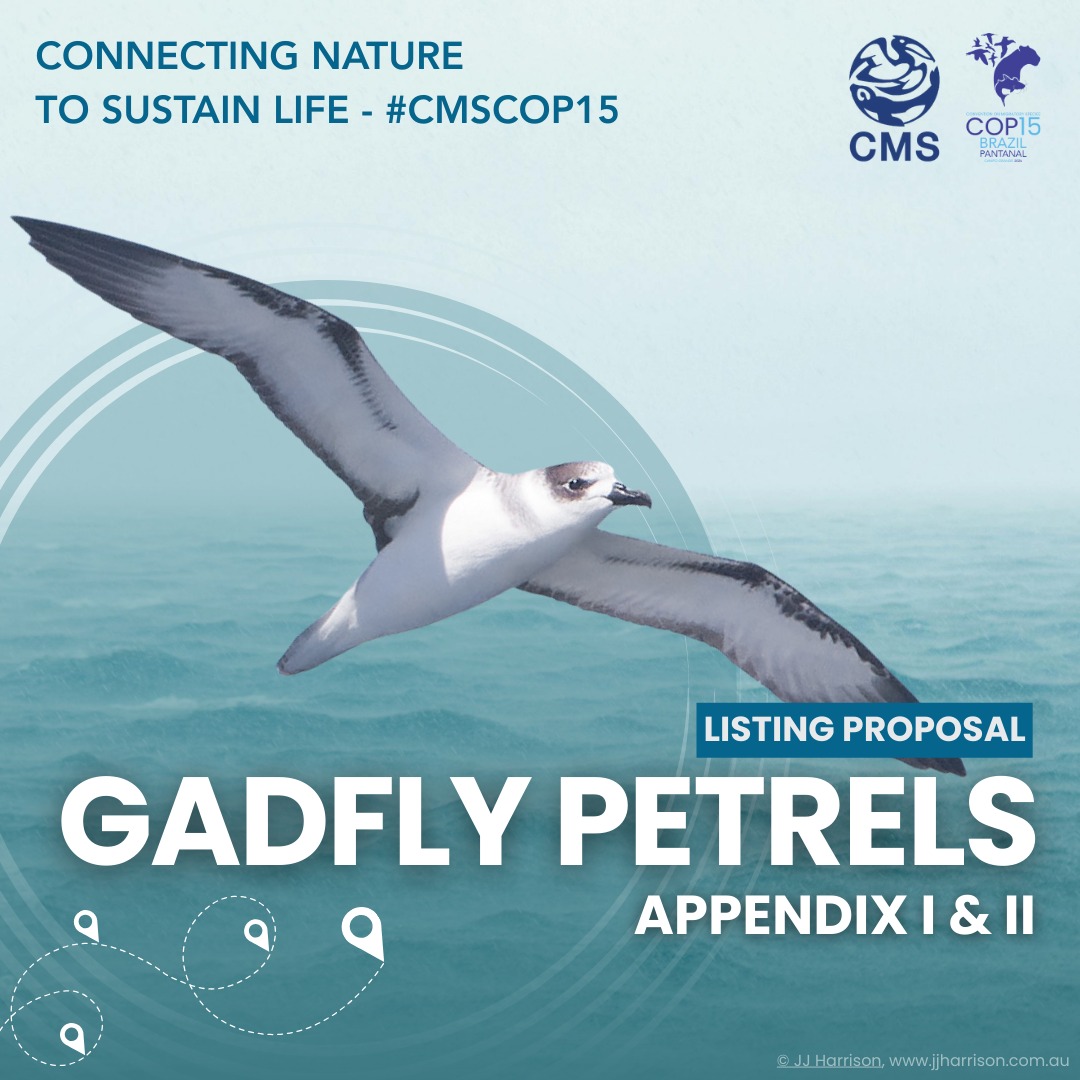 The Governments of New Zealand, Australia, Brazil, Chile, Cook Islands, Dominican Republic and Fiji jointly submitted a proposal (UNEP/CMS/COP15/Doc.30.2.5/Rev.1), to list 26 species, subspecies and geographic populations of gadfly petrels in the genera Pterodroma and Pseudobulweria on either Appendix I or II to the Fifteenth Meeting of the Conference of Parties (COP15) of the Convention on Conservation of Migratory Species of Wild Animals (CMS) that met last week in Campo Grande, Brazil.
The proposed petrels include single-island endemics and poorly known taxa. They are mainly of low-latitude and tropical islands in the Atlantic, Indian and Pacific Oceans. Four gadfly petrels are already listed on CMS Appendix I. They are the Bermuda P. cahow, Galapagos P. phaeopygia, Hawaiian P. sandwichensis and Henderson P. atrata Petrels.
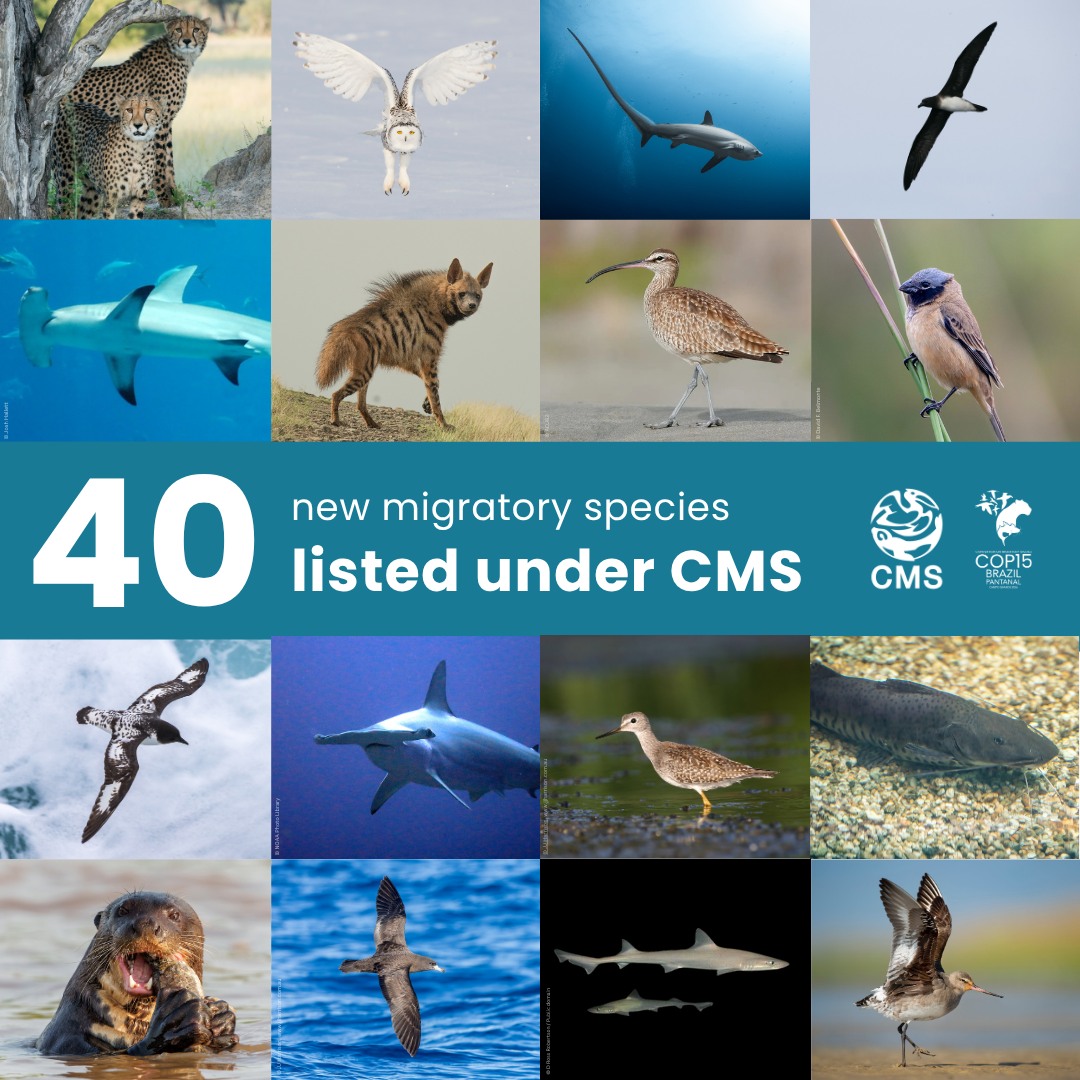
New Zealand introduced the proposal to list the gadfly petrels, noting they are “some of the rarest, most endangered, and poorly understood seabirds in the world.” Many Parties attending COP15 expressed strong support in the Committee of the Whole (CoW). The proposal was then submitted for adoption by the Conference of Parties, which formally adopted all the proposed taxa onto its Appendices on 30 March, the closing day of COP15.
 The gadfly petrel proposal is available in English, French and Spanish (click here).
The Albatross and Petrel Agreement held a workshop in Wellington, New Zealand in 2017 with the objective of advancing understanding about best approaches for international cooperation in the conservation of Pterodroma and other small burrowing petrel species.
John Cooper, Emeritus Information Officer, Agreement on the Conservation of Albatrosses and Petrels, 30 March 2026