 English
  Français
  Español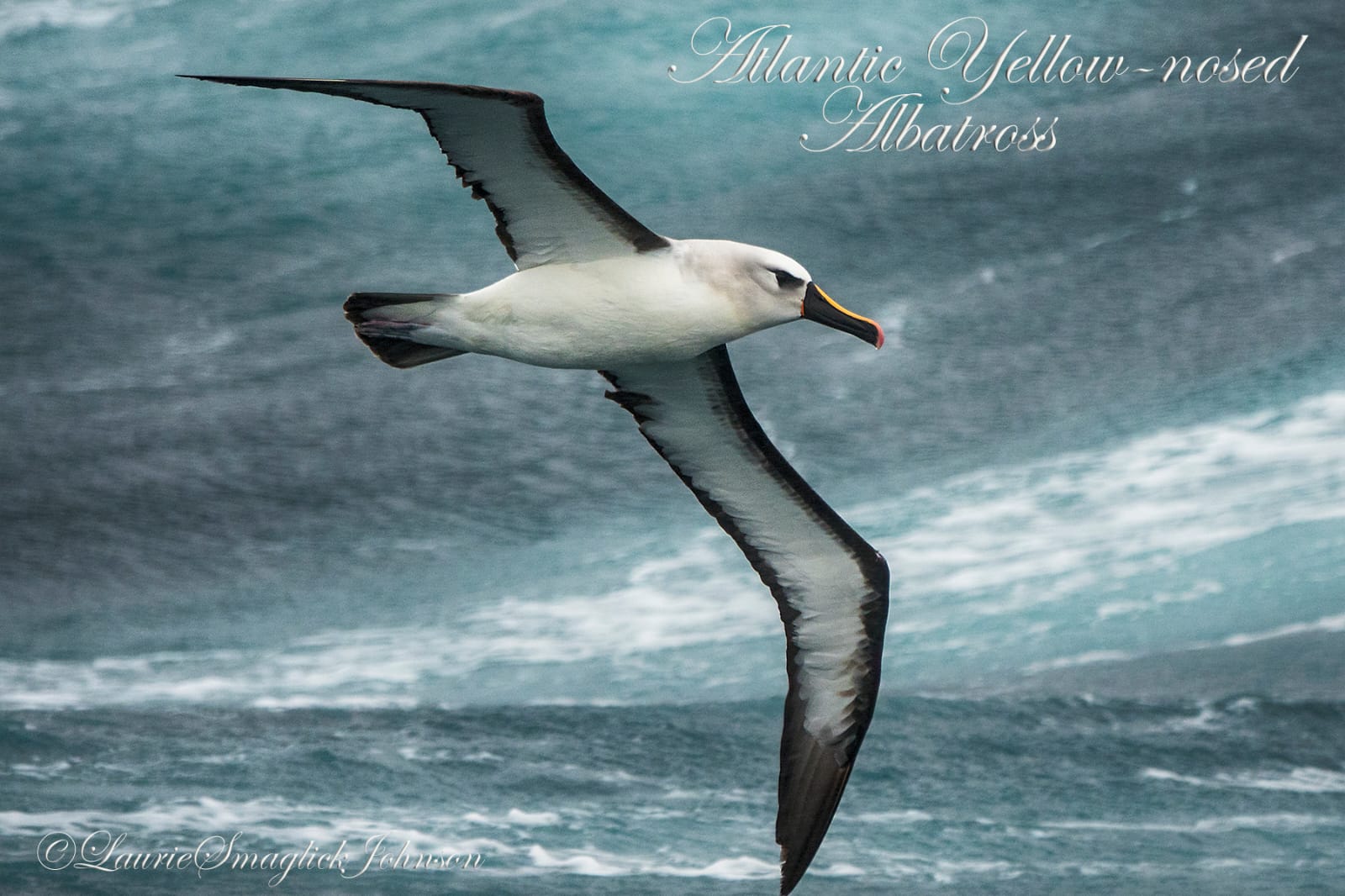
Atlantic Yellow-nosed Albatrosses occur regularly in Namibian waters, where they are risk to being caught as bycatch by fisheries, photograph by Laurie Smaglick Johnson
Two weeks of meetings of the Albatross and Petrel Agreement commence today in Swakopmund, Namibia. Day One kicks off with the Ninth Meeting of the Population and Conservation Status Working Group (PaCSWG9) under the Convenorship of Mark Favero (Argentina), Patricia Pereira Serafini (Brazil) and Richard Phillips (UK). The list of the current 33 PaCSWG members and their affiliations can be viewed here.
The one-day meeting will consider eight Documents and 19 Information Papers. Note some of these documents are only publicly available as summaries. According to the meeting’s Draft Agenda, subjects to be discussed include Updates on Species Assessments, Population Status and Trends, and Threats (including management of land-based threats, pollution, climate change and High Pathogenicity Avian Influenza). The meeting will conclude with a review of the working group’s work programme for the period 2026-2028.
The PaCSWG will produce a written report of its deliberations which will tabled for discussion and adoption by the Fifteenth Meeting of ACAP’s Advisory Committee (AC15) during Week Two of the Swakopmund events, to be held from Monday 1 to Friday 5 June in the Swakopmund Plaza Hotel.
The meeting of PaCSWG9 will be followed by a joint SBWG13/PaCSWG9 meeting held on Tuesday 26 May to discuss cross-cutting issues and a three-day meeting of the Seabird Bycatch Working Group (SBWG13, 27-29 May).
More information on the Namibian meetings is available in three AC15 Meeting Circulars. Terms of Reference for the Population and Conservation Status Working Group can be read from here.
John Cooper, Emeritus Information Officer, Agreement on the Conservation of Albatrosses, 25 May 2026