
 English
  Français
  Español
 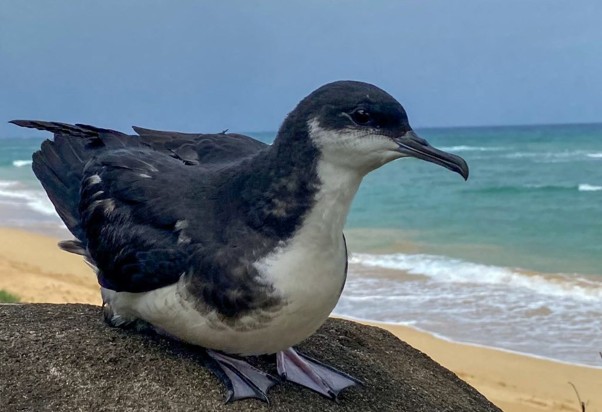 Newell’s Shearwater, photograph by Daniela Casilla, Pacific Missile Range Facility
“Dark Skies” are now the new night-time norm at the Pacific Missile Range Facility on the western coast of the Hawaiian island of Kauai after the U.S Navy installation implemented its annual programme during the shearwater fledging season, which started on 08 September and runs until 15 December.
Annual fledging of Critically Endangered Newell’s Shearwaters Puffinus newelli and Endangered Hawaiian Petrels Pterodroma sandwichensis on Kauaʻi marks a critical period for two of Hawaii’s most threatened seabirds. The Pacific Missile Range Facility Dark Skies programme plays a vital role in protecting these birds by reducing light pollution and ensuring safer passage for fledglings.
“Fledgling seabirds leave their mountain burrows for the first time each year to make their way to the ocean, relying on natural light from the moon and stars to navigate. Bright artificial lighting can disorient the birds, causing them to become grounded, injured or killed. The Dark Skies program — developed in partnership with federal, state and community organizations — helps reduce light pollution and improve[s] safe passage for fledglings during this vulnerable migration period. Numbers of fallen seabirds decreased significantly since the program began.”
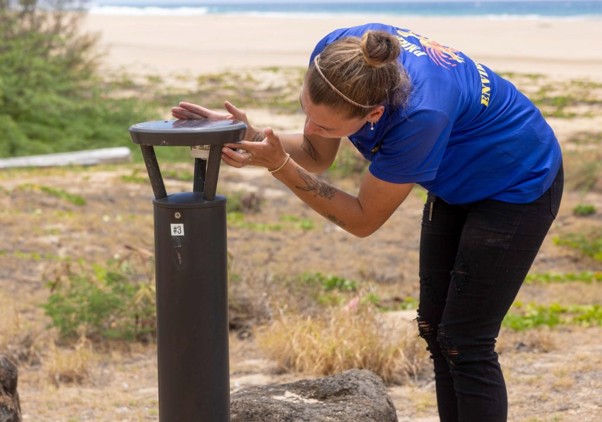 A Pacific Missile Range Facility environmental staff member installs a light shield along the Waiapuaʻa Bay walking path in preparation for Dark Skies. Photograph by Jonell Kaohelauliʻi, U.S. Navy
Protective measures include shielding exterior lighting, reducing nonessential lights during peak fledging periods and increasing community awareness about responsible night-time lighting practices.
“The Pacific Missile Range Facility encourages residents and businesses to support islandwide seabird protection efforts by dimming or shielding outdoor lights at night and reporting any downed seabirds to the Save Our Shearwaters or taking the bird to the nearest aid station.”
Edited from an article in the Kaua’i News dated 16 September 2026.
John Cooper, Emeritus Information Officer, Agreement on the Conservation of Albatrosses and Petrels, 23 September 2026