 English
  Français
  Español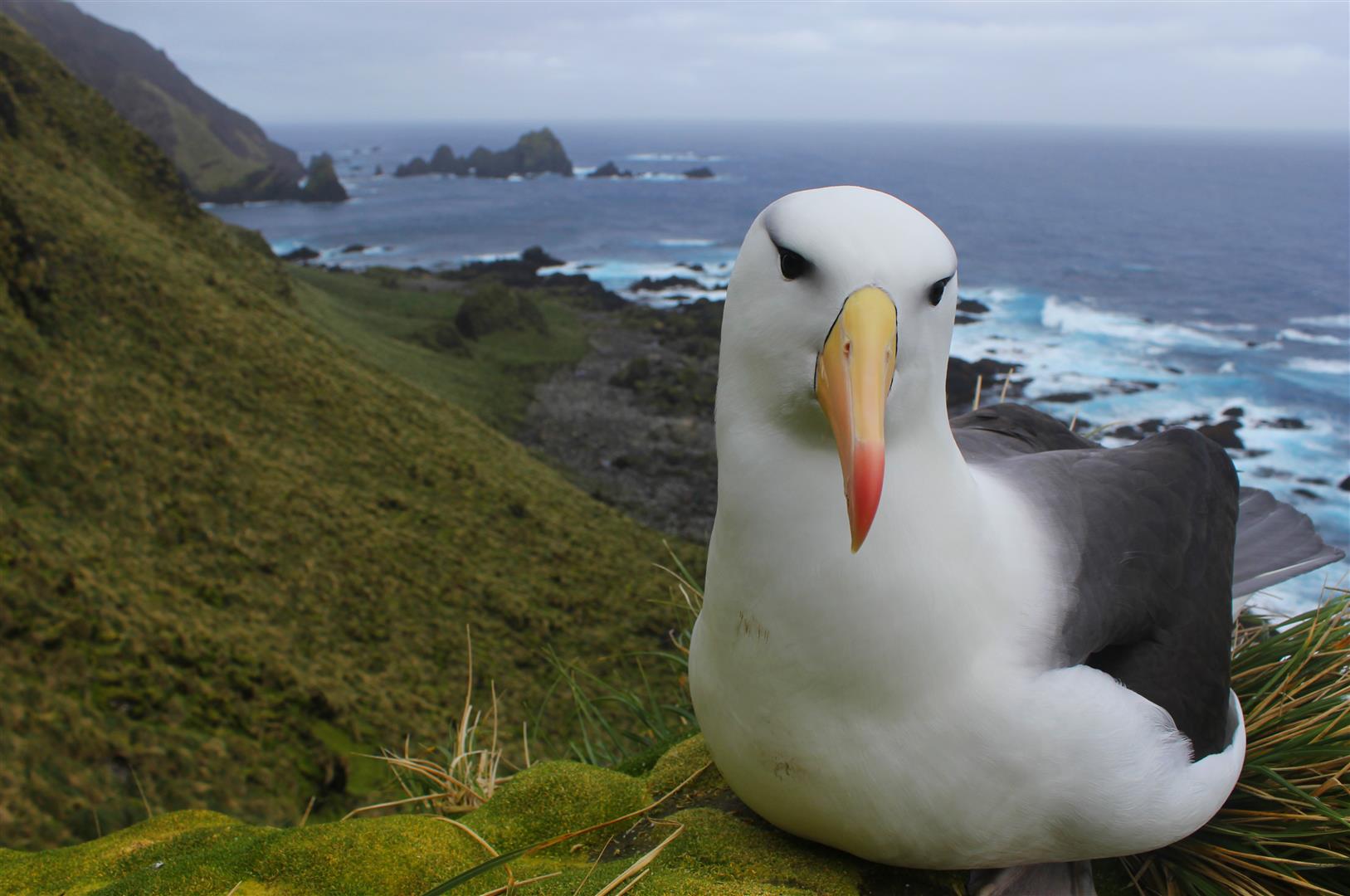
A Black-browed Albatross on Macquarie Island, photograph by Melanie Wells
The Australian Department of Climate Change, Energy, the Environment and Water (DCCEEW) has decided to temporarily withdraw all 24 people , including field researchers, currently on Macquarie Island “due to the psycho-social risk to expeditioners of a potential H5 avian influenza (bird flu) outbreak” (click here).
The media release continues “Macquarie Island is home to large elephant seal populations close to station buildings. Thousands of elephant seals are born close to the Macquarie Island research station every spring. While H5 bird flu has not yet been detected there, expert assessments predict a high likelihood of a significant mortality event during the upcoming breeding season. Elephant seals have proved particularly susceptible to H5 bird flu, with pup mortality rates of more than 90 per cent discovered in some areas on the sub-Antarctic external Australian territory of Heard Island and McDonald Islands. While the risk to humans of H5 bird flu is considered low, we can’t ignore the psychosocial risks of living near potentially large numbers of affected animals.”
The Australian Antarctic Division aim to mitigate impacts of the withdrawal on “Australia’s international monitoring obligations, wildlife monitoring and infrastructure”. The removal of the expeditioners is set to take place this month or early next. No announcement has been made on when the island will be reoccupied after what will be its first time without human presence since 1948.
Concern about the planned withdrawal has been expressed by at least one science group. ACAP Latest News will continue to report on the withdrawal and what it might mean for research on and the conservation of the seven ACAP-listed species of albatrosses and petrels that breed on Macquarie Island.
John Cooper, Emeritus Information Officer, Agreement on the Conservation of Albatrosses and Petrels, 01 September 2026.