 English
 Français
 Español
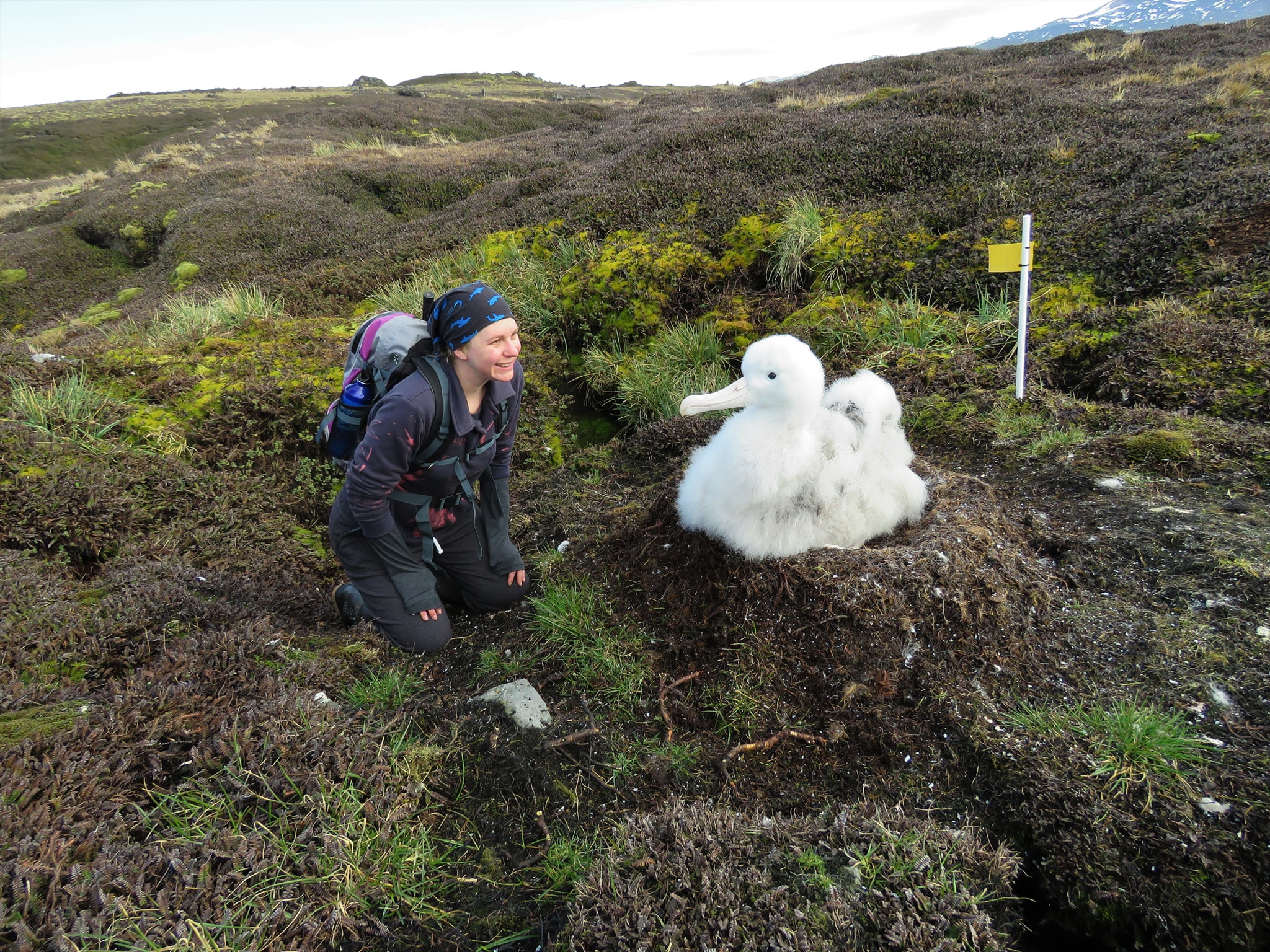
Danielle Keys with a Wandering Albatross chick in a long-term monitoring colony on Marion Island
Danielle Keys is a South African marine biologist and seabird conservationist who earned her postgraduate degrees from Nelson Mandela University. She gave a webinar on 17 October 2026 in the Learn-the-Birds series, describing her MSc research on Wedge-tailed Shearwaters Ardenna pacifica and PhD research on Wandering Albatrosses Diomedea exulans on islands within the tropical and sub-Antarctic Indian Ocean. Her 68-minute talk is now available as a has YouTube recording, which she described as below.
“In this presentation, I explore seabirds across tropical, temperate, and sub-Antarctic environments, drawing on the field research I have been involved in across these regions. From working with one of the greatest ocean explorers, the Wandering Albatross, to studying the far smaller and more elusive storm petrels, I reflect on what seabirds reveal about the health of our oceans and the systems that sustain marine life. Seabirds are powerful indicators of environmental change. By tracking where they go, how they feed, and how their populations change over time, I aim to understand shifts in ocean productivity, climate variability, and broader marine ecosystems. Long-term monitoring and the tracing of marine top predators are especially important because many of these species live for decades, and their life histories reflect gradual but significant changes happening at sea. Studying seabirds across different oceans helps researchers compare pressures, resilience, and adaptation across environments. Each region presents unique challenges. In tropical systems, seabirds often face habitat loss, human disturbance, and invasive species. In temperate regions, fisheries interactions and pollution are key threats. In the sub-Antarctic, climate-driven shifts in prey availability and extreme environmental variability shape survival and breeding success. Yet there is also hope. Predator-free islands and focused conservation efforts have shown remarkable success, allowing seabird populations to recover and ecosystems to stabilise. Through this journey across oceans and environments, I hope to highlight how seabirds connect land and sea, science and exploration, and ultimately people to the health of the marine world.”
John Cooper, Emeritus Information Officer, Agreement on the Conservation of Albatrosses and Petrels, 20 November 2026