 English
  Français
  Español
 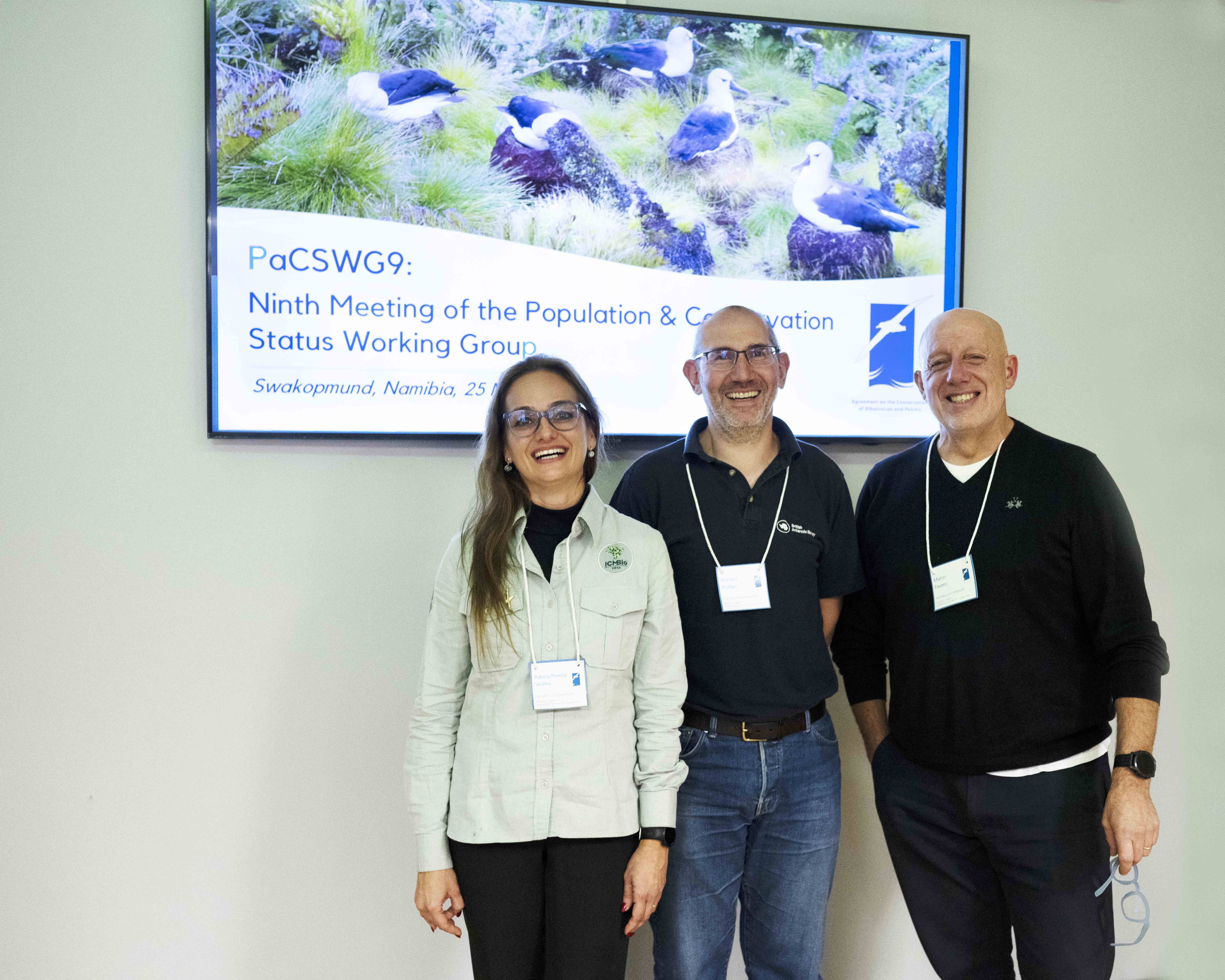 Patricia Pereira Serafini, Richard Phillips and Marco Favero, Swakopmund, Namibia, photograph by Barry Baker
On the second day of the 15th Meeting of the ACAP Advisory Committee (AC15) in Swakopmund, Namibia, the attending delegates and observers heard reports from two working groups and a joint meeting that had met the previous week. With large agendas and many documents to consider, this article highlights one matter discussed by each meeting thought to be of particular interest to the interested public.,
The Report of the Ninth Meeting of the Population and Conservation Status Working Group (PaCSWG9) was given by its Co-convenor Dr Patricia Pereira Serafini (Brazil). Matters covered included population trends, IUCN Red List review, pollutants and marine debris, High Pathogenicity Avian Influenza, and climate change
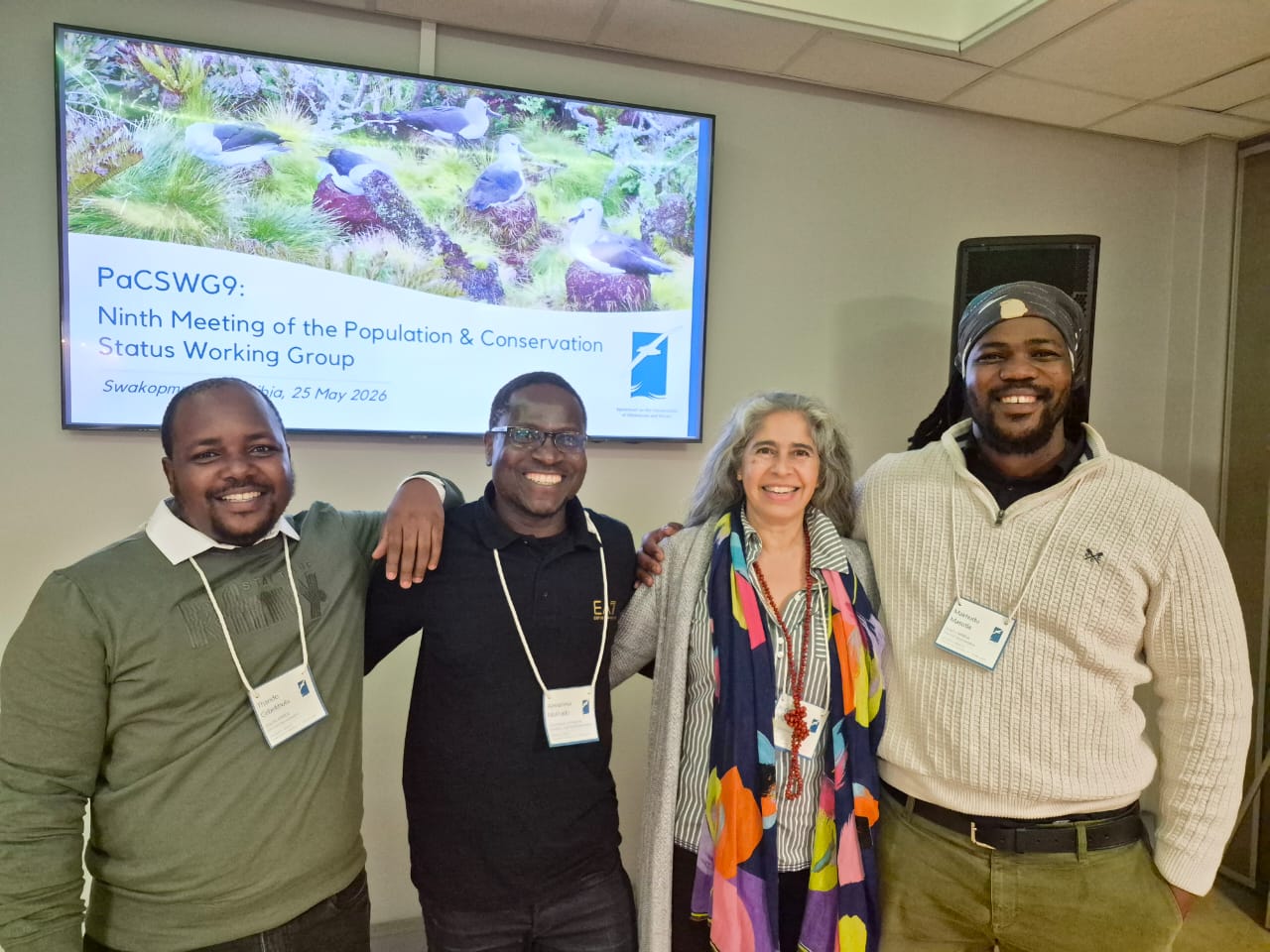
South African delegates and observers Thando Cebekhulu, Azwianewi Makhado, Andrea Angel and Makhudu Masotla attending the ACAP meetings in Swakopmund, Namibia, May-June 2026, photograph by Barry Baker
Under agenda item 6.1 Updates on Management of Land-based Threats the Population and Conservation Status Working Group considered an update (PaCSWG9 Inf 05) on the “Saving Marion Island’s Seabirds: The Mouse-Free Marion (MFM) Project” by Dr Azwianewi Makhado, Marine Top Predators Programme, Department of Forestry, Fisheries and the Environment, South Africa and Dr Anton Wolfaardt, MFM Project Manager, which aims to eradicate invasive House Mice from Marion Island. The update reports that field trials on the island have confirmed high bait palatability but have also identified strong seasonal variability in mouse abundance and bait uptake, leading to the ongoing refinement of baiting methods. The eradication operation is currently planned to take place in 2029.
The Advisory Committee recognised the conservation importance of large-scale invasive species eradication programmes, such as on Marion Island. On behalf of the Advisory Committee, its Chair, Dr Michael Double (Australia), confirmed its support of the MFM Project and wished it well.
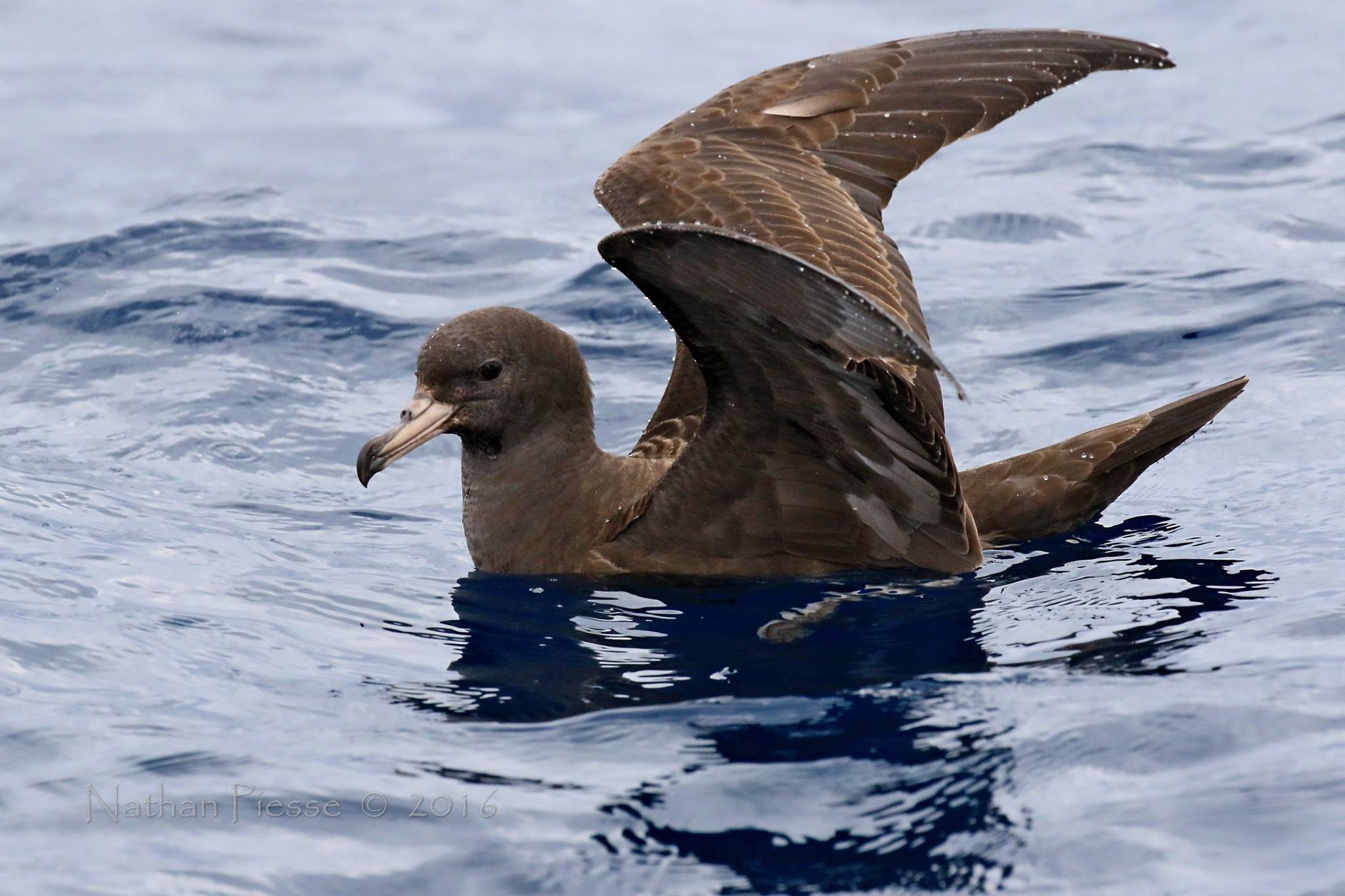 Flesh-footed Shearwater at sea, photograph by Nathan Piesse
The outcomes of the Report of the Joint Thirteenth Meeting of the Seabird Bycatch Working Group and Ninth Meeting of the Population and Conservation Status Working Group were presented to the Advisory Committee by SBWG Co-convenors Tatiana Neves (Brazil) and Megan Tierney (UK). Discussion took place on overlap of birds and at-sea threats, ACAP seabird bycatch mitigation best practice advice and coordination of activities relating to Regional Fisheries Management and Conservation Organisations (RFMCOs).
Under Agenda Item 6 Listing of Species on Annex One the joint meeting discussed the potential listing of the Flesh-footed Shearwater Ardenna carneipes on ACAP Annex 1 (AC15 Doc 18, presented by New Zealand, Australia and France), following its listing on Appendix II of the Convention of Migratory Species (CMS). The Advisory Committee agreed to study the CMS listing proposal document and identify any additional information that should be included in a potential proposal for listing the shearwater on the Agreement’s Annex One, to bring forward to ACAP’s meetings in 2027.
The Advisory Committee also encouraged research to provide support to ACAP’s taxonomic approach of treating as full species three pairs of ACAP-listed taxa: Black-browed Albatross Thalassarche melanophris and Campbell Albatross T. impavida, White-capped Albatross T. steadi and Shy Albatross T. cauta, and Balearic Shearwater Puffinus mauretanicus and Yelkouan Shearwater P. yelkouan.
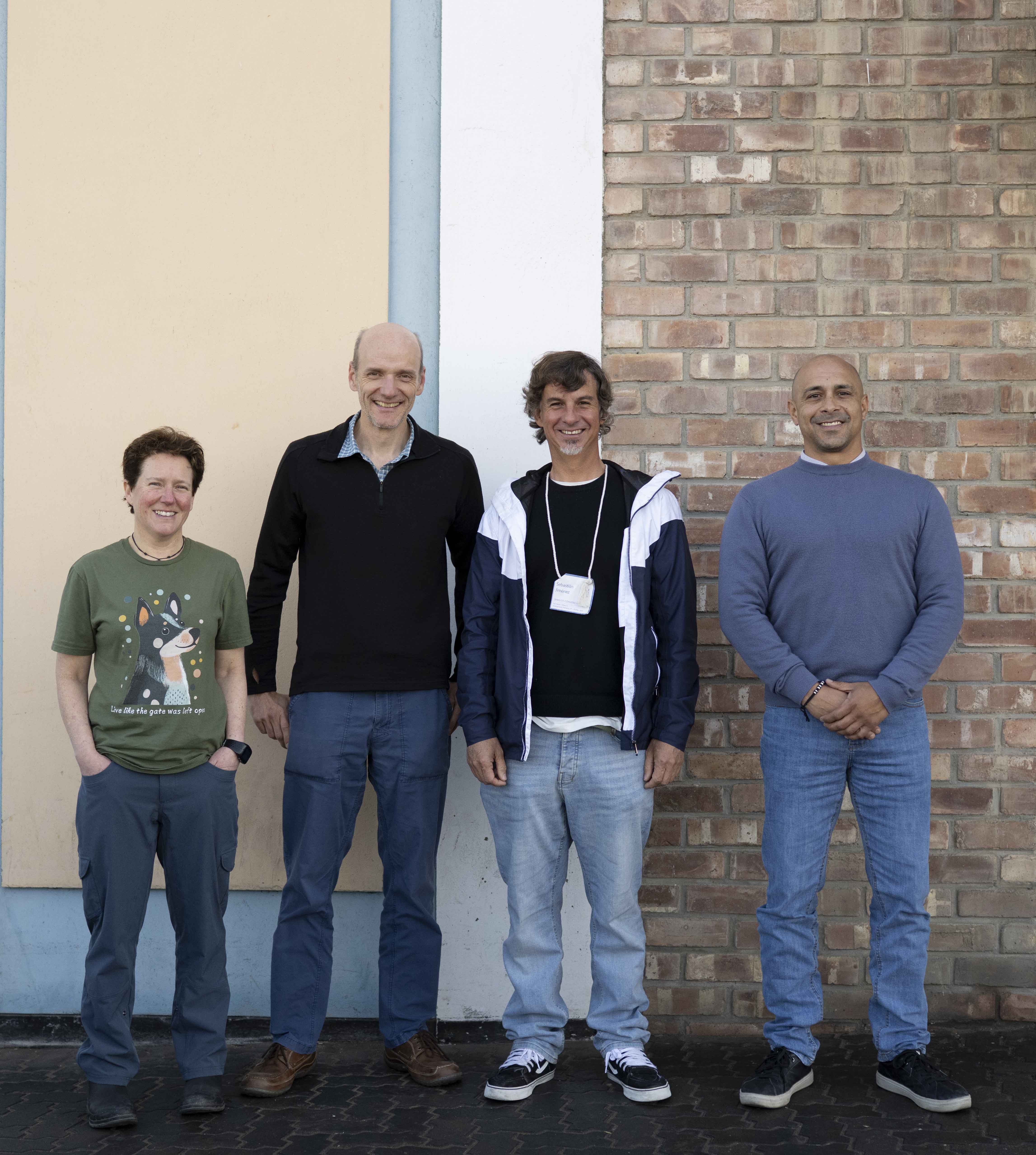 Co-convenors of the Seabird Bycatch Working Group, Megan Tierney, Igor Debski, Sebastián Jiménez and Dimas Gianuca, Swakopmund, Namibia, photograph by Barry Baker
The afternoon was taken up with a discussion of the Report of the 13th Meeting of the Seabird Bycatch Working Group , delivered by its Co-convenor, Dr Sebastián Jiménez (Uruguay). The working group meeting had taken account of 27 Documents and Information Papers, available online from here. Subjects covered included ACAP’s best practice advice for mitigating seabird bycatch, artisanal and small-scale fisheries, and bycatch mitigation in demersal longline, pelagic longline, trawl and purse seine fisheries.
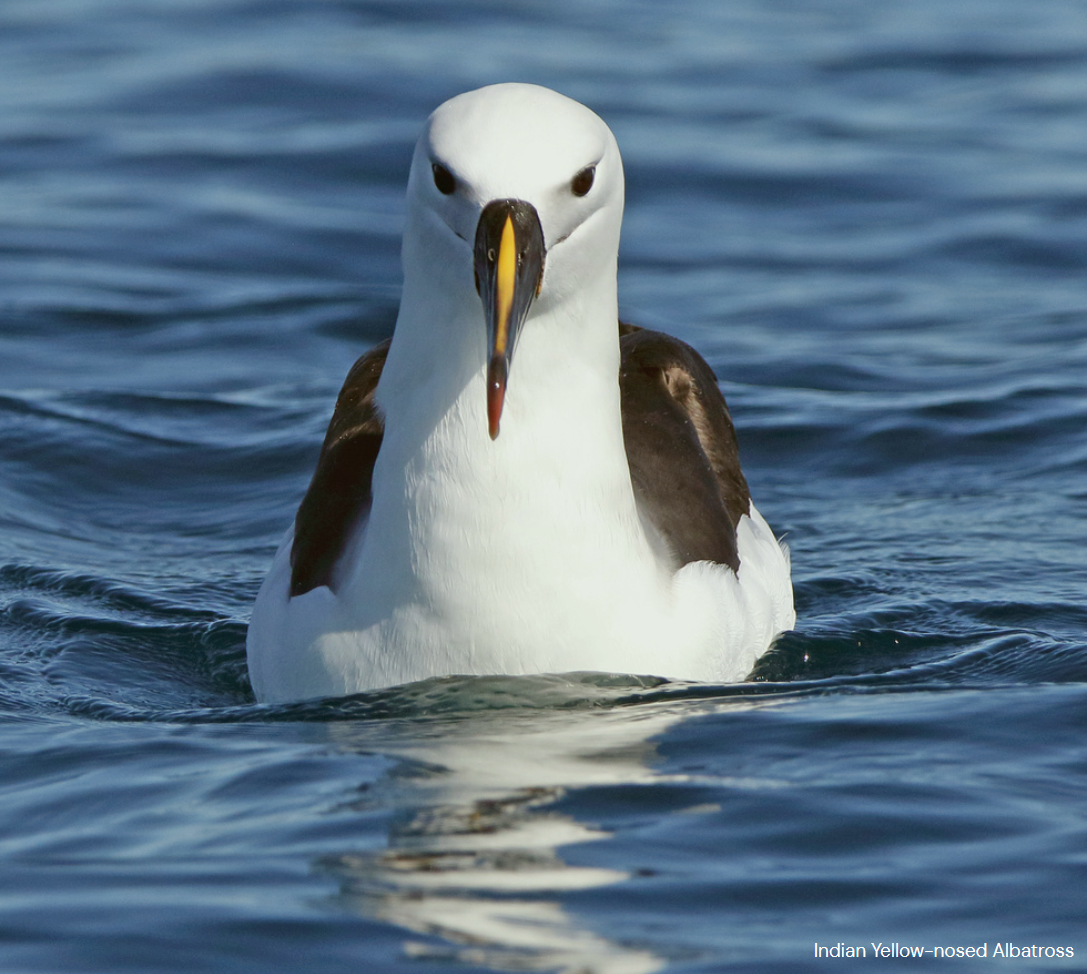
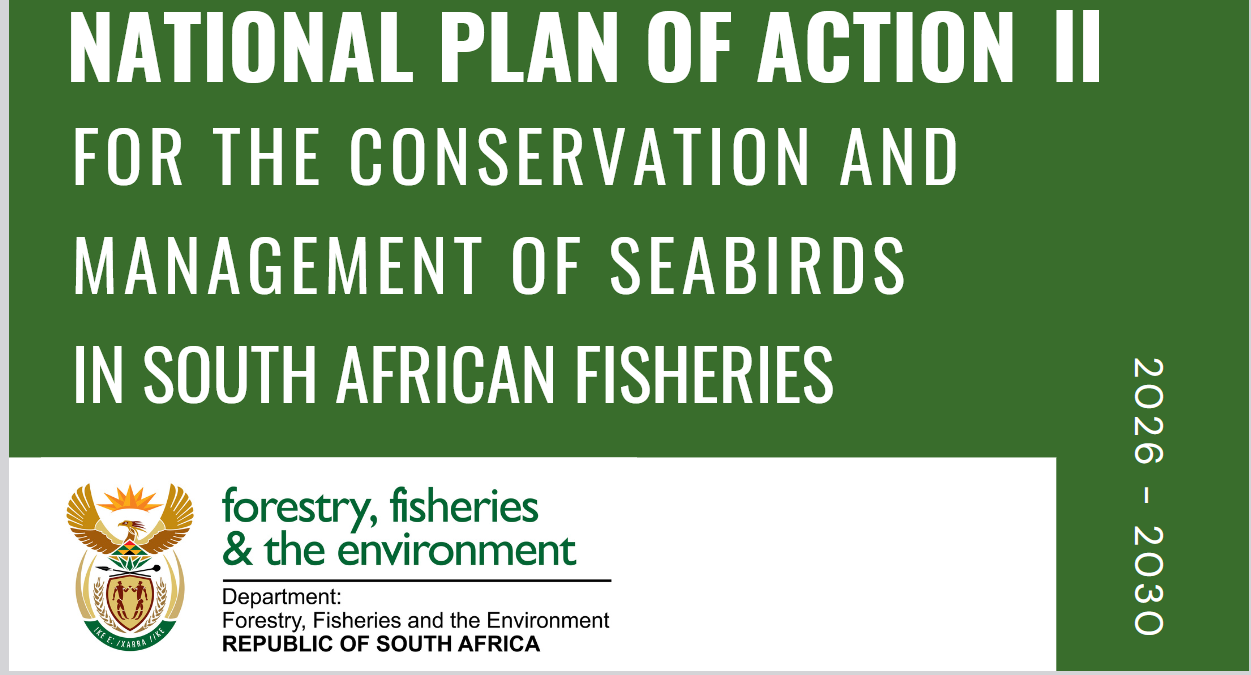
Under Agenda Item 11 Review of Status of Implementation of NPOA-Seabirds the Working Group congratulated South Africa for its production of an updated National Plan of Action for the Conservation and Management of Seabirds (NPOA Seabirds II) to cover the period 2026 to 2030 (SBWG13 Inf 13). The new plan builds on the country’s first NPOA Seabirds which dealt only with longline fisheries. It aligns with the Food and Agriculture Organization of the United Nation’s International Plan of Action for Reducing Incidental Catch of Seabirds in Longline Fisheries, which supports the FAO Code of Conduct for Responsible Fisheries. The new version addresses all types of South African fisheries, including artisanal gill netting and beach seining. It also includes South Africa’s sub-Antarctic Marion and Prince Edward Islands in the southern Indian Ocean with its ambit.
The collation and drafting of South Africa’s NPOA Seabirds II were undertaken by Sven Kerwath, Azwianewi Makhado, Makhudu Masotla, Gerhard Cilliers, Andrea Angel, Joannes de Goede, Peter Ryan and Larvika Singh.
References:
Department of Environmental Affairs & Tourism [Cooper, J., Petersen, S. & Ryan, P.G.] 2008. South African National Plan of Action for Reducing the Incidental Catch of Seabirds in Longline Fisheries. Department of Environmental Affairs & Tourism. 32 pp.
Department of Forestry, Fisheries and the Environment. 2026. National Plan of Action II for the Conservation and Management of Seabirds in South African Fisheries 2026-2030. Department of Forestry, Fisheries and the Environment. 36 pp.
John Cooper, Emeritus Information Officer, Agreement on the Conservation of Albatrosses, 02 June 2026