
 English
  Français
  Español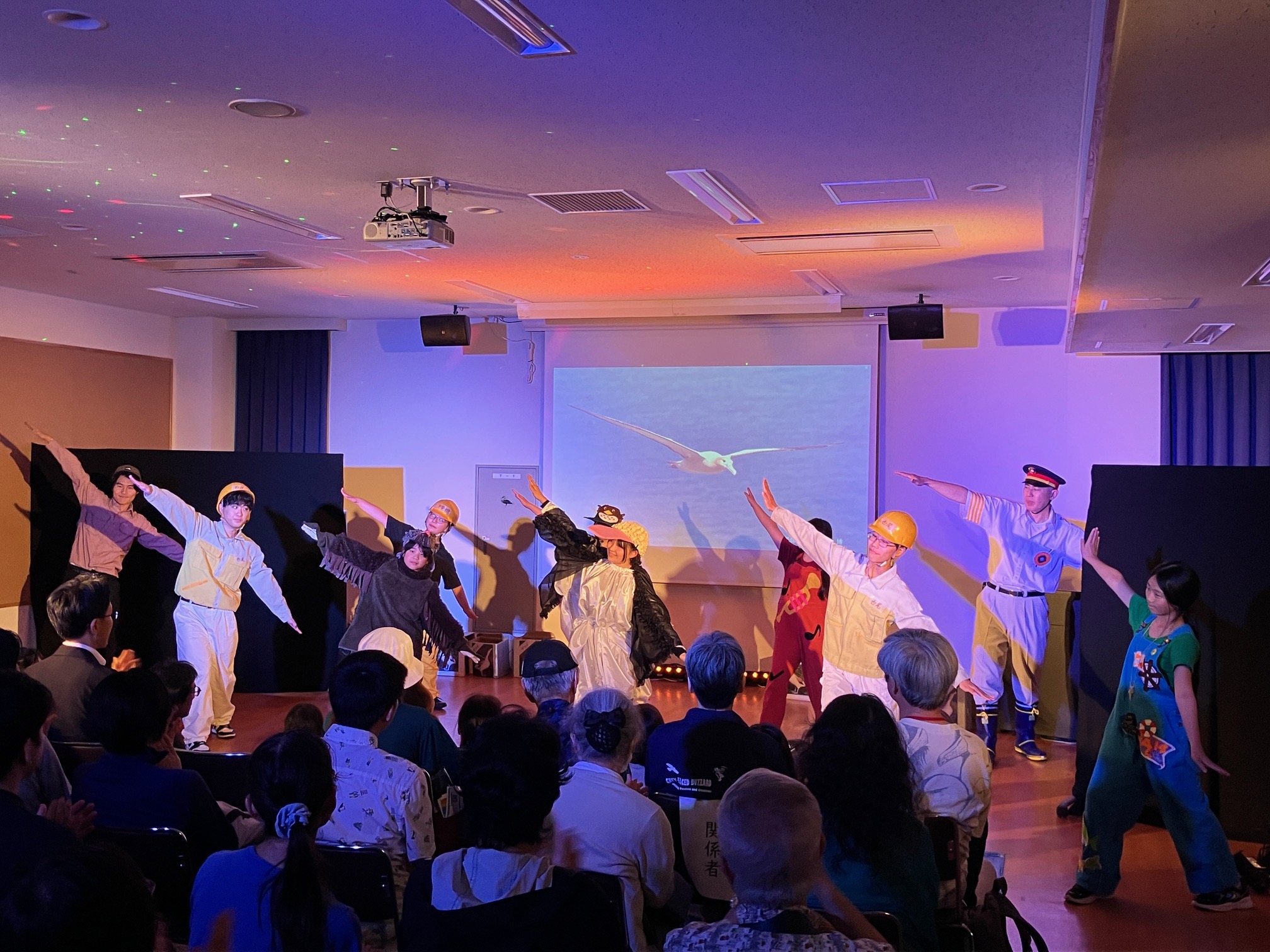
A musical performance about the Short-tailed Albatross was presented by the theatrical company Cinderella
Once again Japan stepped up to the mark by celebrating World Albatross Day and its theme for 2026 of “Habitat Restoration” on 19 June in Tokyo over a two-and-a-half-week period. Following a now familiar pattern, World Albatross Day & Seabird Week (WAD&SW) for 2026 consisted of an exhibition, public lectures, a musical performance (new for 2026) and an excursion. This year's event centred on celebrating the recovery of the Vulnerable Short-tailed Albatross Diomedea albatrus from near extinction to reach a total population of more than 10 000 birds.
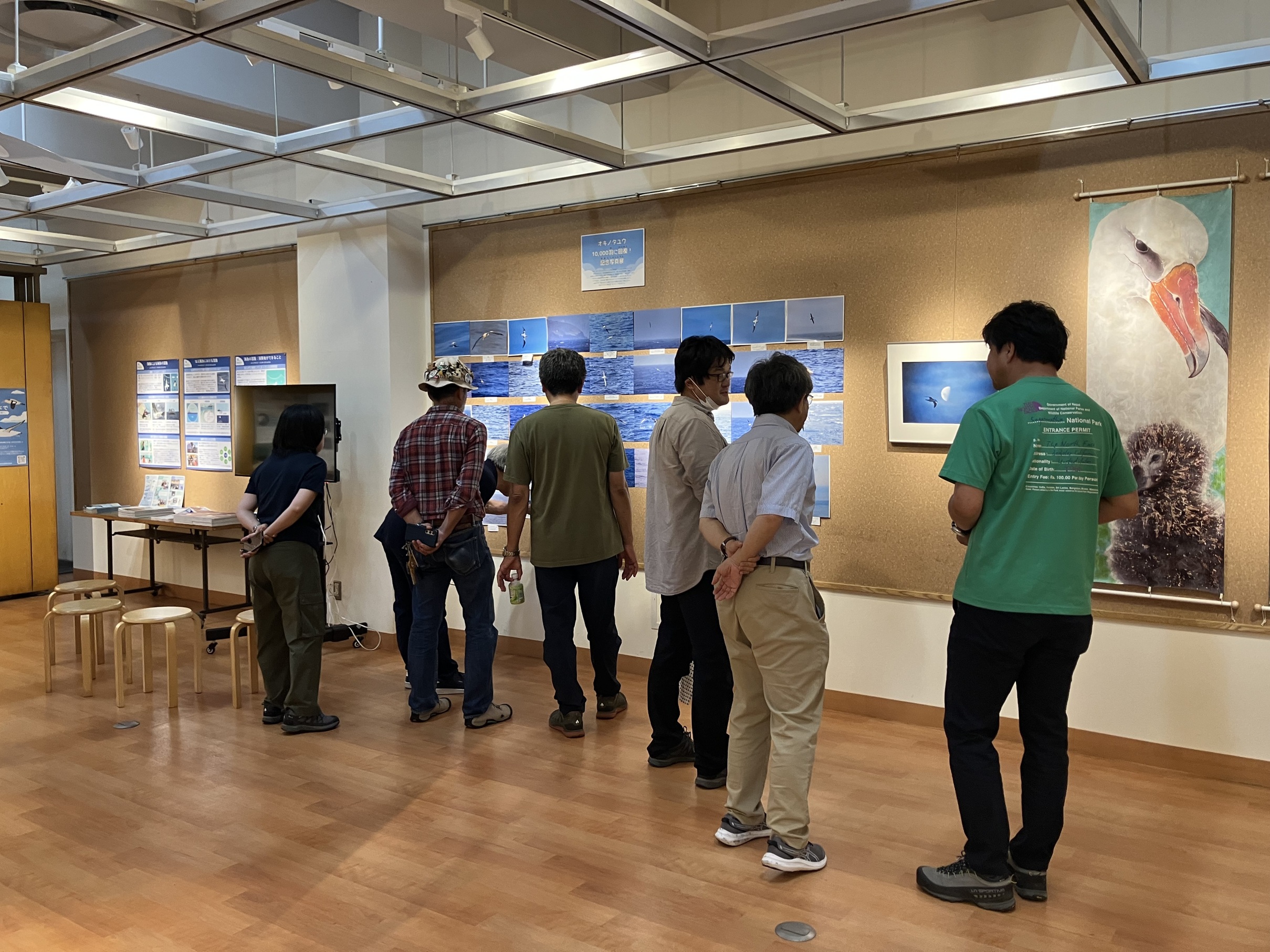 Visitors view Japan’s World Albatross Day exhibition in Tokyo
Special exhibition
Held in the Tokyo Port Wild Bird Park for two and a half weeks, the exhibition featured photographs, arts, educational posters and displays highlighting the history, recovery, and conservation of the Short-tailed Albatross and other seabirds. The exhibition attracted nearly 700 visitors.
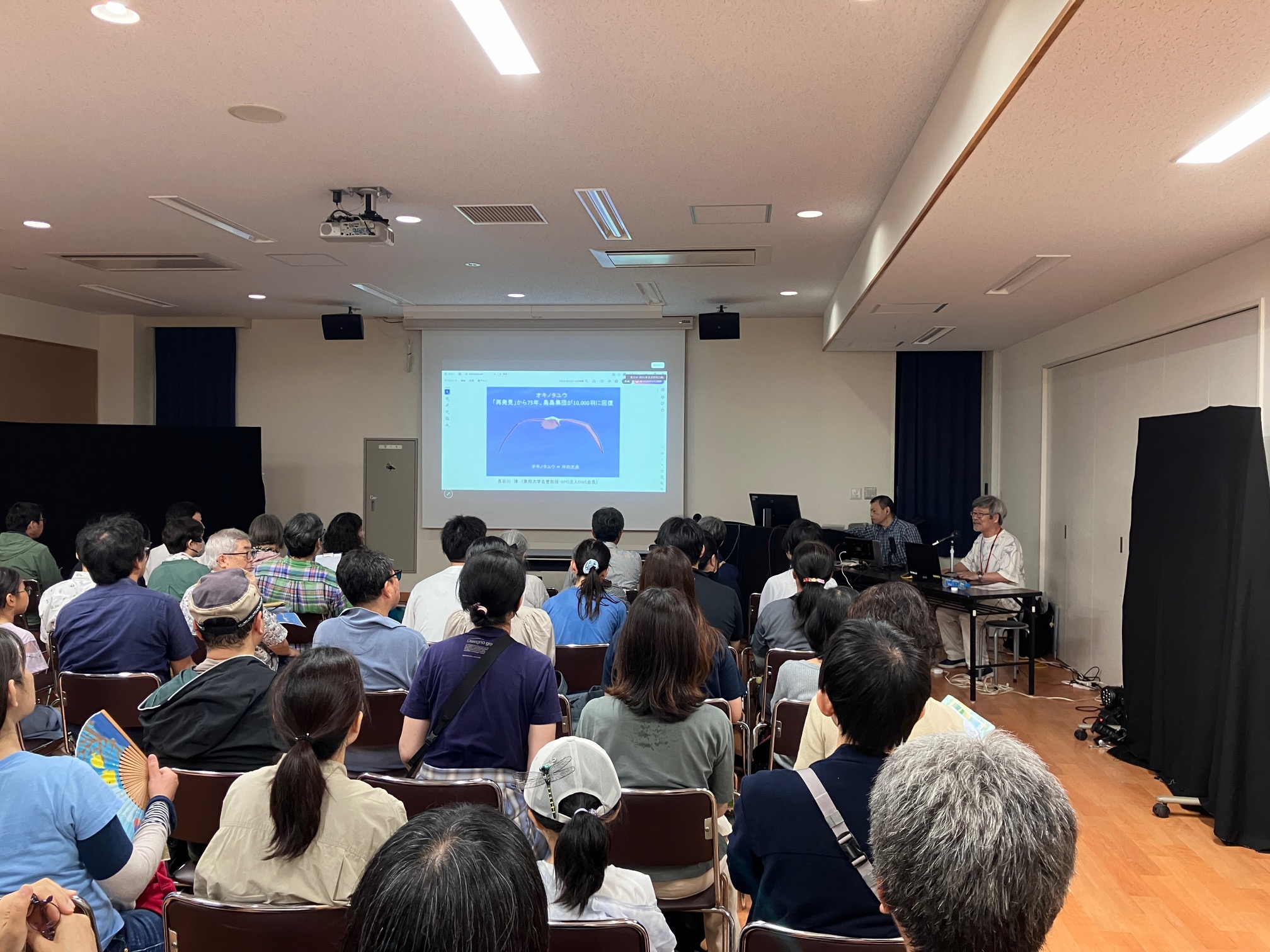 Dr Hiroshi Hasegawa (seated back right) gives his plenary address on the recovery of the Short-tailed Albatross
Public lectures
Held as a hybrid event, with over 80 people attended in person and nearly 120 registered online, the lectures commenced with a plenary presentation by Dr Hiroshi Hasegawa, entitled “75 years since the ‘rediscovery’ of the Short-tailed Albatross the Torishima population has recovered to 10 000 birds”. The plenary was followed by four talks covering recent conditions and the future conservation of Short-tailed Albatrosses on Torishima, the physiological and ecological effects of global warming on seabirds, the accumulation of harmful chemicals from plastics in seabirds, and environmental education inspired by the history of the Short-tailed Albatross on Torishima.
Musical performance
A musical on the Short-tailed Albatross was performed in front of an audience of 40 by Gekidan Cinderella, a theatrical company that works on the theme of dream, hope, adventure, and living with nature. It has 30 members, including both children and adults.
The Cinderella Theatrical Company writes on its website: “Taking up various natural environments such as the sea, forests and sandy beaches, we create "SDGs musicals" that address the problems faced by nature and creatures, and deliver them to the general public ... in an easy-to-understand manner.” Its performances are held not only in theatres and halls, but also in visitor centres, commercial facilities, zoos, and at eco-events.
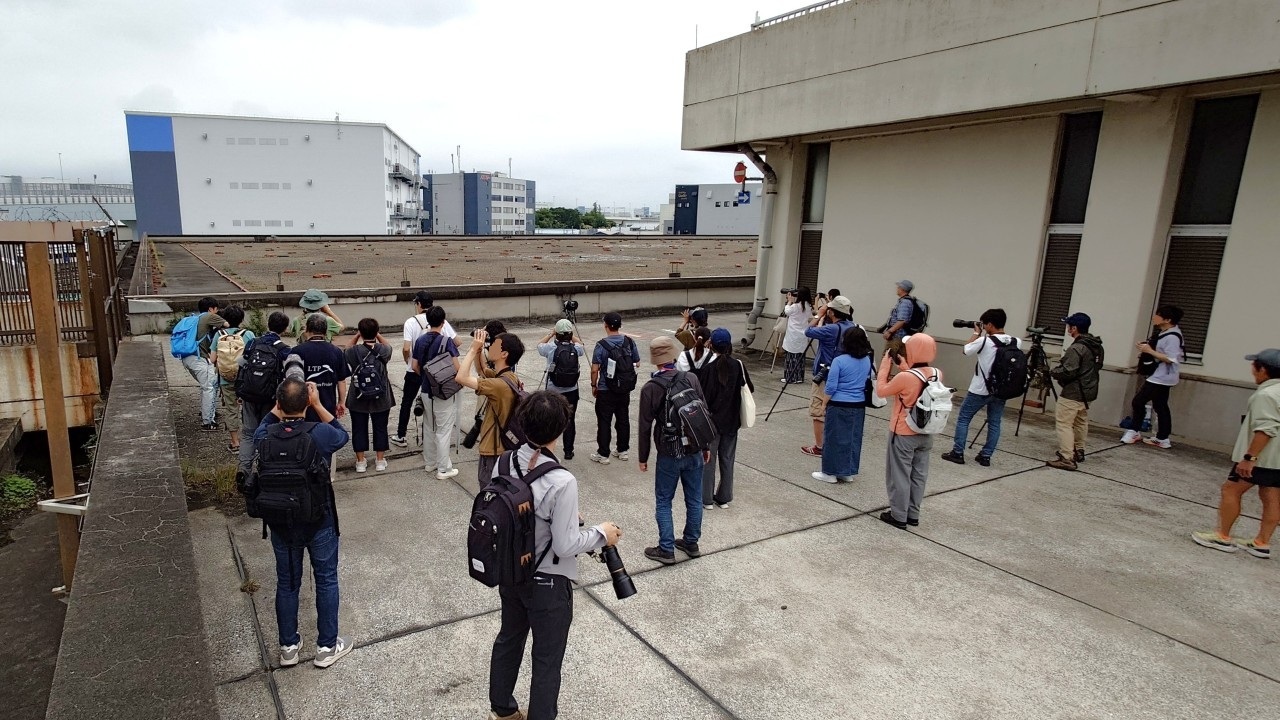 Participants on the Little Tern excursion
Little Tern excursion
An excursion to view a Little Tern Sterna albifrons colony was held at the Morigasaki Water Reclamation Center rooftop nesting site. The 35 participants observed five Little Terns in flight and one incubating. The outing was followed by a visit to the exhibition.
Activities supporting WAD2026 in Japan were organized by the WAD&SW Committee, comprising six conservation organizations: the Wild Bird Society of Japan, the Oceanic Wildlife Society, BirdLife International Tokyo, Institute of Boninology, Little Tern Project, and the Yamashina Institute for Ornithology.
Permission has been obtained from the parents/guardians for their children to appear in the photograph of the musical presentation.
From information and photographs received.
John Cooper, Emeritus Information Officer, Agreement on the Conservation of Albatrosses and Petrels, 05 August 2026, edited 10 August 2026