
 English
  Français
  Español
 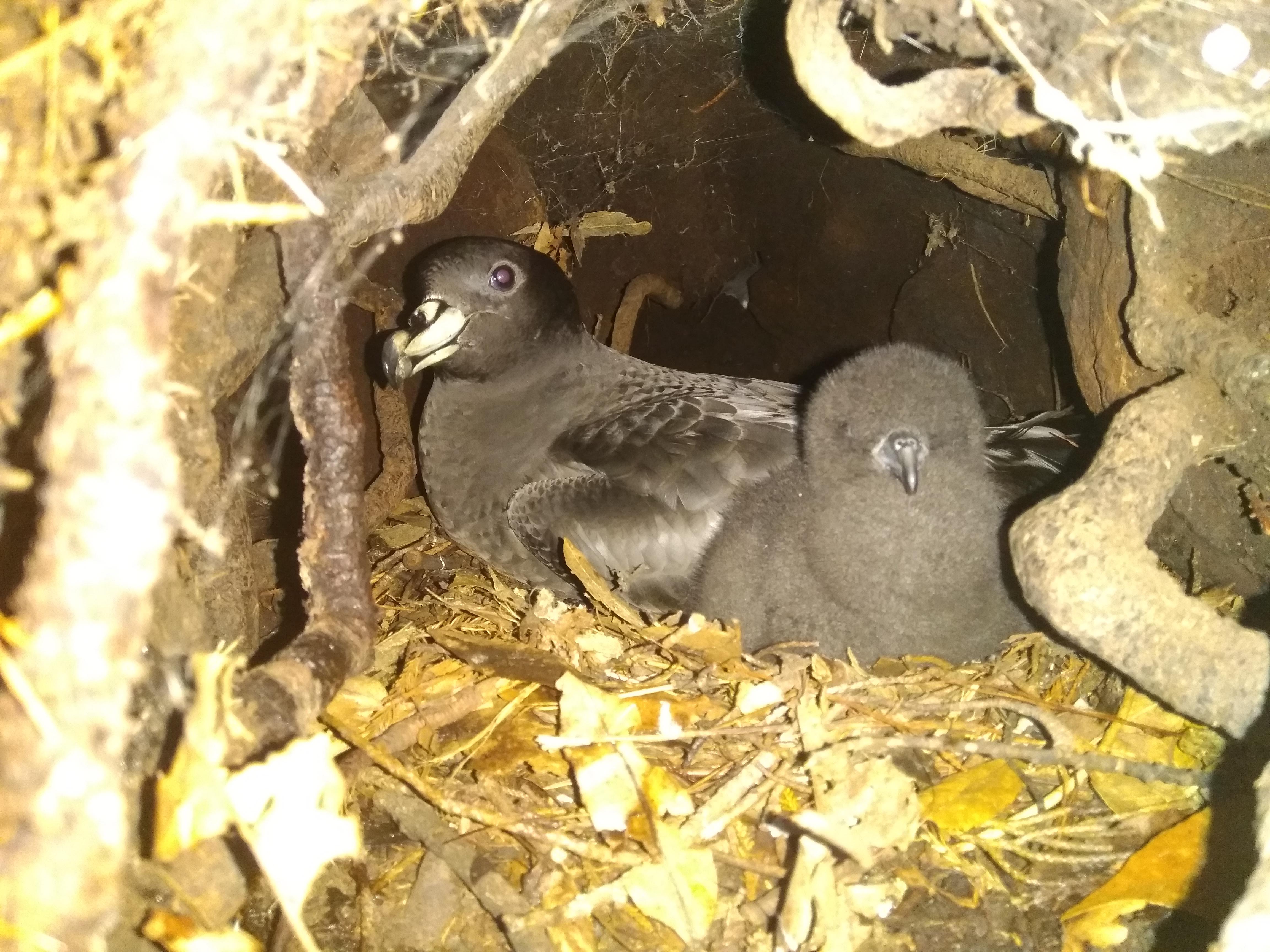 An adult Black Petrel with its downy chick, photograph by George Hobson
“High on the slopes of Hirakimata [Mount Hobson] on Aotea Great Barrier Island, something remarkable is happening. In burrows tucked beneath forest roots and moss, tākoketai Black Petrel chicks are hatching. These downy youngsters, born in January and February 2026, represent both hope and uncertainty for one of Aotearoa’s most threatened seabirds.”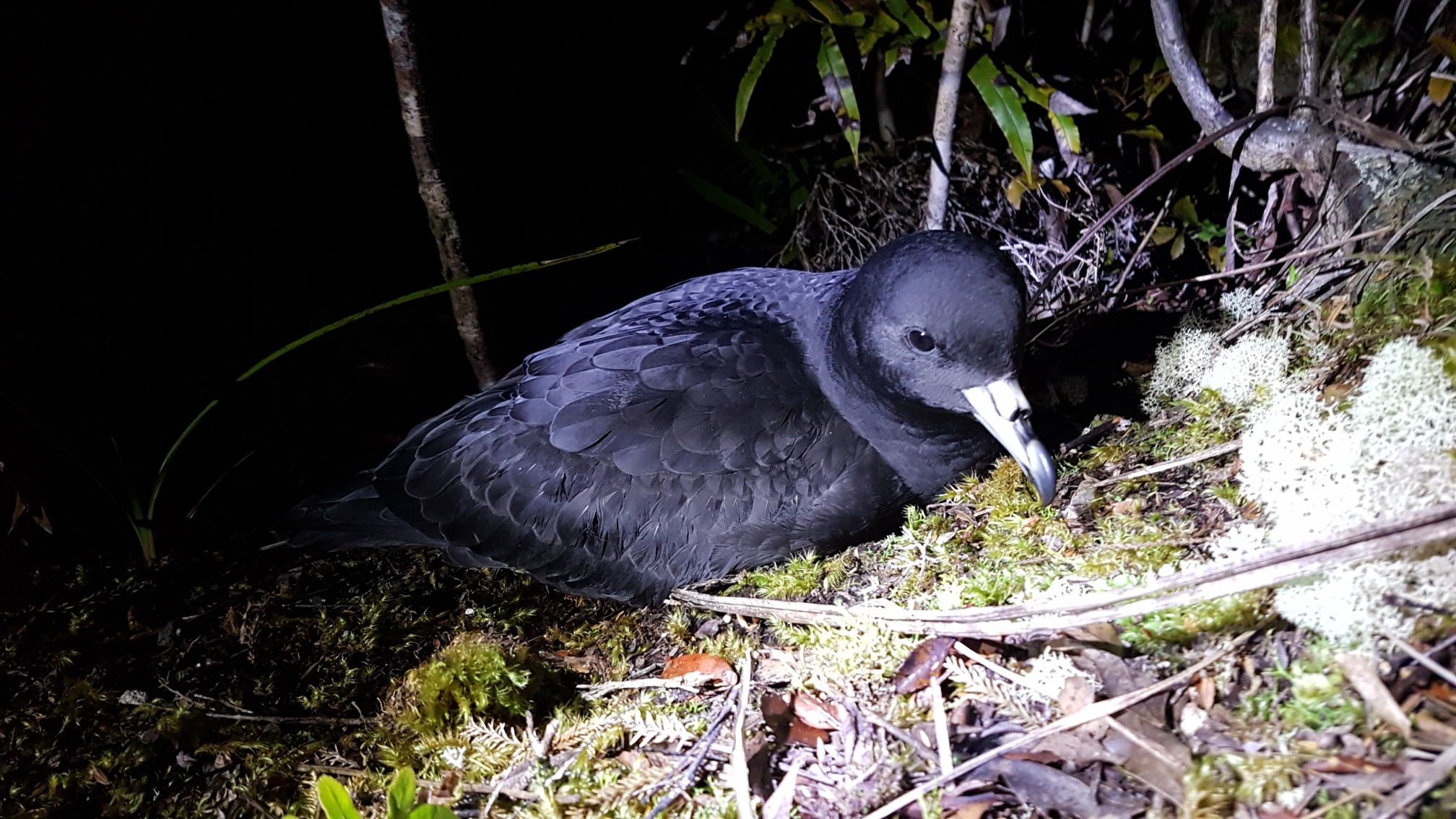 A Vulnerable Black Petrel Procellaria parkinsoni fledgling on Great Barrier Island in May 2019, photograph by ‘Biz’ Bell
“With only around 5000 breeding pairs remaining, the tākoketai is one of our most at-risk seabirds, facing threats from fishing bycatch and habitat loss. In April, as part of the largest Black Petrel tracking study ever undertaken, satellite trackers will be placed on fledglings before they leave Aotea, revealing where young birds spend their crucial first few months at sea.
Read the whole article from Live Ocean’s Impact Director Hannah Prior and Project Manager Elaine Harris here.
John Cooper, Emeritus Information Officer, Agreement on the Conservation of Albatrosses and Petrels, 10 March 2026