ACAP Latest News

Read about recent developments and findings in procellariiform science and conservation relevant to the Agreement on the Conservation of Albatrosses and Petrels in ACAP Latest News.

Chris Jordan’s ALBATROSS movie is offered as a free public artwork

The documentary film ALBATROSS was offered as a “permanent gift to the world” on World Oceans Day this month, when it was screened at the United Nations, for free viewing and downloading (click here).

A Laysan Albatross regurgitates plastic fragments to its chick

 laysan albatross corpse midway chris jordan

Corpse of a Laysan Albatross on Midway showing its stomach contents of plastic artefacts, including a cigarette lighter

Photographs by Manuel Maqueda and Chris Jordan

Filmed at Midway Atoll in the North Pacific it concentrates on the ingestion of plastic artefacts by ACAP-listed and globally Near Threatened Laysan Albatrosses Phoebastria immutabilis.

Find more information on the 97-minute film here.

John Cooper, ACAP Information Officer, 21 June 2018

Recapturing banded White-capped Albatrosses on New Zealand’s Disappointment Island

Kalinka Rexer-Huber (Parker Conservation, Dunedin, New Zealand) and colleagues have submitted a draft report to the Conservation Services Programme of New Zealand’s Department of Conservation on the demographics of the globally Near Threatened White-capped Albatross Thalassarche steadi on Disappointment Island, part of the Auckland Islands.

The report’s Executive Summary follows:

“The white-capped albatross Thalassarche cauta steadi is a biennially-breeding seabird endemic to New Zealand. The species ranks highly in assessments of the risk of commercial fisheries to New Zealand seabird populations, but there is some uncertainty around key life-history parameters. The overarching objective of this study is to obtain robust estimates of white-capped albatross demographic parameters.

To estimate key parameters, including adult survival, recruitment and population trends, we established a marked population of breeding birds at Disappointment Island, Auckland Islands (the largest population of white-capped albatross). We report on field work in 2018 to resight banded albatrosses and increase the number of banded birds in the study area. Three years of recaptures are not sufficient for robust demographic rate estimates, but enable some exploratory analyses. To assess how many further resighting visits might be required for demographic rate estimates to be suitably precise, we generate preliminary demographic rates from resightings to date (2015–2018) and use these to simulate realistic ‘dummy’ resighting data that build on the real data to date.

A total of 521 breeding white-capped albatrosses have been banded in four annual visits to Disappointment Island 2015–2018. A third of white-capped albatross banded in previous years were resighted in 2018, compared to 22% and 23% in the two previous visits 2016 and 2017. These resighting rates are encouraging, given the short duration of visits (insufficient time for incubating birds to be relieved by mates), and given that the primary focus of the work was on banding, not resighting.

Simulation modelling indicated that the accuracy and precision of all estimated parameters incrementally improves with further consecutive resighting years. Using the example of adult survival, we show that the rate of decrease in the variance of survival estimates was greatest with 1–3 further years of consecutive resighting effort from present.”

White capped Albatross by Matt Charteris

White-capped Albatrosses, photograph by Matt Charteris

With thanks to Barry Baker.

Reference:

Rexer-Huber, K., Thompson, D.R. & Parker, G.C. 2018.  Draft White-capped albatross mark-recapture study at Disappointment Island, Auckland Islands. Field season 2018.  Draft Report to Department of Conservation, Conservation Services Programme.  Dunedin: Parker Conservation  15 pp.

John Cooper, ACAP Information Officer, 20 June 2018

An Atlantic Yellow-nosed Albatross succumbs to ingesting Styrofoam in Brazil

The field team of the Santos Basin Beach Monitoring Project (Projeto de Monitoramento de Praias da Bacia de Santos) found the corpse of a globally Endangered Atlantic Yellow-Nosed Albatross Thalassarche chlororhynchos on Beach of the English (Praia dos Ingleses), Florianópolis, Santa Caterina Island, Brazil on 10 May this year.

The bird, that appears to have been a juvenile based on a photograph showing an all-black bill, was then necropsied, revealing the stomach contained a large number of fragments of white Styrofoam (closed-cell extruded polystyrene foam), likely to have caused the bird’s demise.

AYNA Styrofoam 2

Corpse of the juvenile Atlantic Yellow-nosed Albatross

AYNA Styrofoam 3

The unopened stomach

AYNA Styrofoam 1

The Styrofoam fragments are obvious in the opened stomach

The Santos Basin Beach Monitoring Project aims to assess the possible impacts of oil production and disposal activities on birds, turtles and marine mammals by monitoring beaches and conducting veterinary care for live animals and undertaking necropsies of dead animals.

Read more here.

A juvenile Atlantic Yellow-nosed Albatross was found with a shoe sole in its stomach on a Brazilian shore earlier in the year (click here).  It may be that recently fledged birds are more susceptible to swallowing foreign objects.

John Cooper, ACAP Information Officer, 19 June 2018

ACAP’s next meeting will be held in Brazil in May 2019

The Eleventh Meeting of ACAP’s Advisory Committee (AC11) will be held from Monday, 13th to Friday, 17th May 2019, in Florianópolis, Brazil.  A Heads of Delegation meeting will be convened on Sunday, 12th May 2019 in the late afternoon/evening.

Meetings of the Seabird Bycatch Working Group (SBWG), and the Population and Conservation Status Working Group (PaCSWG) will precede AC11 at the same venue (SBWG9 from Monday 6th to Wednesday 8th May, and PaCSWG5 from Thursday 9th to Friday 10th May).

Information on key dates for submission and distribution of meeting documents for AC11 and the Working Group meetings, as well as other relevant information, will be provided in Meeting Circular 1.

Atlantic Yellow-nosed Albatrosses are a common visitor to Brazilian waters where they are risk to being caught on longlines, becoming entangled and ingesting plastic

Photograph taken on Gough Island by Andrea Angel & Ross Wanless

Brazil has previously hosted the Agreement; the Second Meeting of the Advisory Committee (AC2) was held in Brasilia in June 2006.  Next year’s Advisory Committee meeting follows on from AC10, held in Wellington, New Zealand in September 2017 and the Sixth Session of the Meeting of Parties (MoP6), held in South Africa’s Kruger National Park last month.  The Seventh Session is due to be held in 2021 in Australia – when ACAP will be 20 years old.

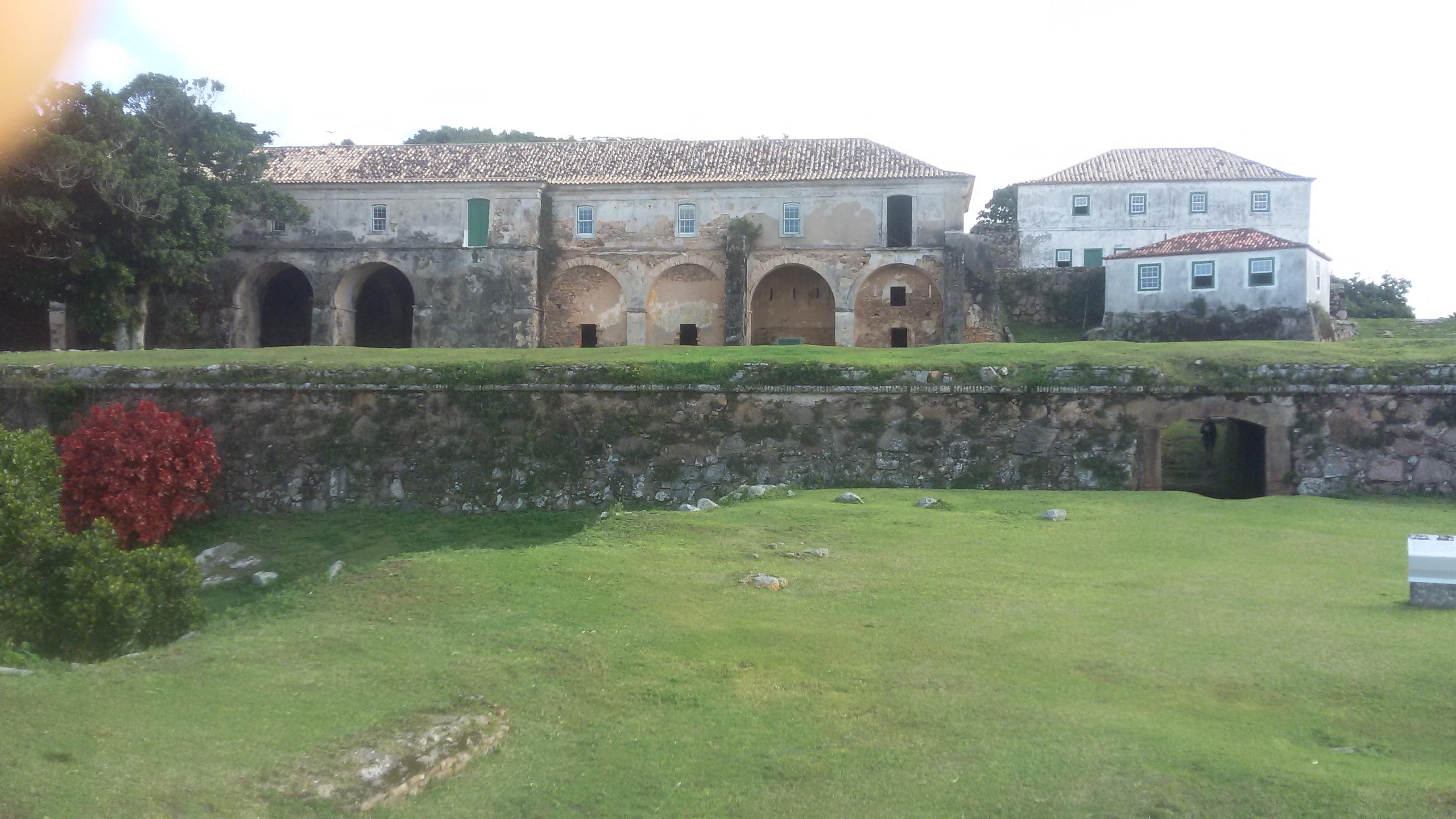
Florianópolis is the capital and second largest city of the State of Santa Catarina in the southern region of Brazil.  It is served by an international airport.  A coastal city situated on Santa Caterina Island with a humid subtropical climate, it has a population of roughly half a million.  The island is connected to the Brazilian mainland by bridges and is known for its many tourist beaches.

Nathan Walker, Chair, ACAP Advisory Committee & Marco Favero, ACAP Executive Secretary, 18 June 2018

Mitigating seabird captures during hauling on smaller longline vessels in New Zealand waters

Joanna Pierre (Johanna Pierre Environmental Consulting Ltd, Naenae, New Zealand) has produced a final report for the Conservation Services Programme of New Zealand’s Department of Conservation that recommends buoy deployments to reduce haul captures and improving fish waste management practices.

The report’s Executive Summary follows:

‘Seabird captures in longline fisheries may occur on the set, soak or haul. Bycatch reduction measures are best developed, tested and implemented for reducing seabird captures occurring during longline sets. Measures affecting the nature and extent of haul captures, and mitigation approaches to reduce those captures, are not well-known. Further, the difficulty of accurately identifying captures as occurring on the haul means that live seabird captures are typically used as a proxy for haul captures in bycatch datasets.

A global review shows four broad categories of mitigation used during longline hauling: physical barriers, measures that reduce the attractiveness of the haul area, deterrents, and operational approaches that are part of fishing. Of devices that operate as physical barriers to seabirds, bird exclusion devices, tori lines and towed buoys have been tested and proven effective in reducing seabird interactions with hauled longline gear. Discharging fish waste such that seabirds are not attracted to the hauling bay is another effective measure, and seabird abundance around vessels is reduced by retaining fish waste during hauling. While a number of deterrents and ad hoc or reactive approaches to reducing haul captures have been discussed in the literature, these have generally not been empirically tested.

Information collected by government fisheries observers on 73 bottom longline and 60 surface longline trips that have occurred since 1 October 2012 on New Zealand vessels < 34 m in overall length showed that most of these measures are in place here. However, implementation may be limited to a small number of vessels (e.g. one bottom longliner used a tori line and two surface longliners used a buoy to reduce seabird interactions with gear at hauling). Implementation may also not be consistent amongst vessels in a fleet, or on the same vessel between trips (e.g., for fish waste management, where some skippers retained all waste until after hauling or discharged when hooks were well below the sea surface, whilst others discharged used baits directly back into the hauling bay as the line was pulled in). This variation in practices creates consequent variation in haul capture risks. Further, the information already available on vessel operations in New Zealand is sufficient to enable actions to reduce haul capture risks.

Fisher and observer records returned from smaller-vessel New Zealand longline fisheries since 1 October 2009 show that 19 – 32% and 12 – 15% of seabird captures were live, and so likely to have occurred on the haul, for bottom and surface longline respectively. Reports of live-captured petrels and shearwaters were more common than albatross captures in datasets for bottom longline fisheries overall. However, these data are numerically dominated by captures reported from Fisheries Management Area (FMA) 1 (where no albatross captures were documented). Albatross captures were reported from bottom longline fisheries in other areas. Across the regions where surface longline fisheries occur, albatrosses dominate capture reports. In both fisher and observer datasets, and for both fishing methods, single live captures per trip were most common. This suggests that implementing reactive mitigation approaches after a live-capture event has occurred will not deliver the greatest possible reduction in haul captures.

Recommended next steps to progress haul mitigation work in smaller-vessel bottom longline fisheries include prioritising mitigation efforts in FMA 1, given the relatively large numbers of captures of high risk seabirds reported there. For surface longline fisheries, a fleet-level approach is recommended, given vessels are often mobile amongst FMAs due to the highly migratory nature of target fish species and relatively smaller number of vessels involved (less than 40). Mitigation efforts should include exploring device deployments (e.g. buoys) to reduce haul captures, and improving the quality and consistency of fish waste management practices that minimise capture risks during hauling. While sufficient information exists to progress mitigation approaches, recommendations are also provided for enhancing data collection to improve knowledge and understanding of the nature and extent of haul captures in New Zealand’s smaller-vessel longline fisheries.”

longline 

With thanks to Barry Baker.

Reference:

Pierre, J.P. 2018.  Mitigating seabird captures during hauling on smaller longline vessels.  [Naenae ]: JPEC Ltd.  49 pp.

John Cooper, ACAP Information Officer, 15 June 2018

The Agreement on the
Conservation of Albatrosses and Petrels

ACAP is a multilateral agreement which seeks to conserve listed albatrosses, petrels and shearwaters by coordinating international activity to mitigate known threats to their populations.

About ACAP

ACAP Secretariat

119 Macquarie St
Hobart TAS 7000
Australia

Email: secretariat@acap.aq
Tel: +61 3 6165 6674