
 English
 Français
 Español
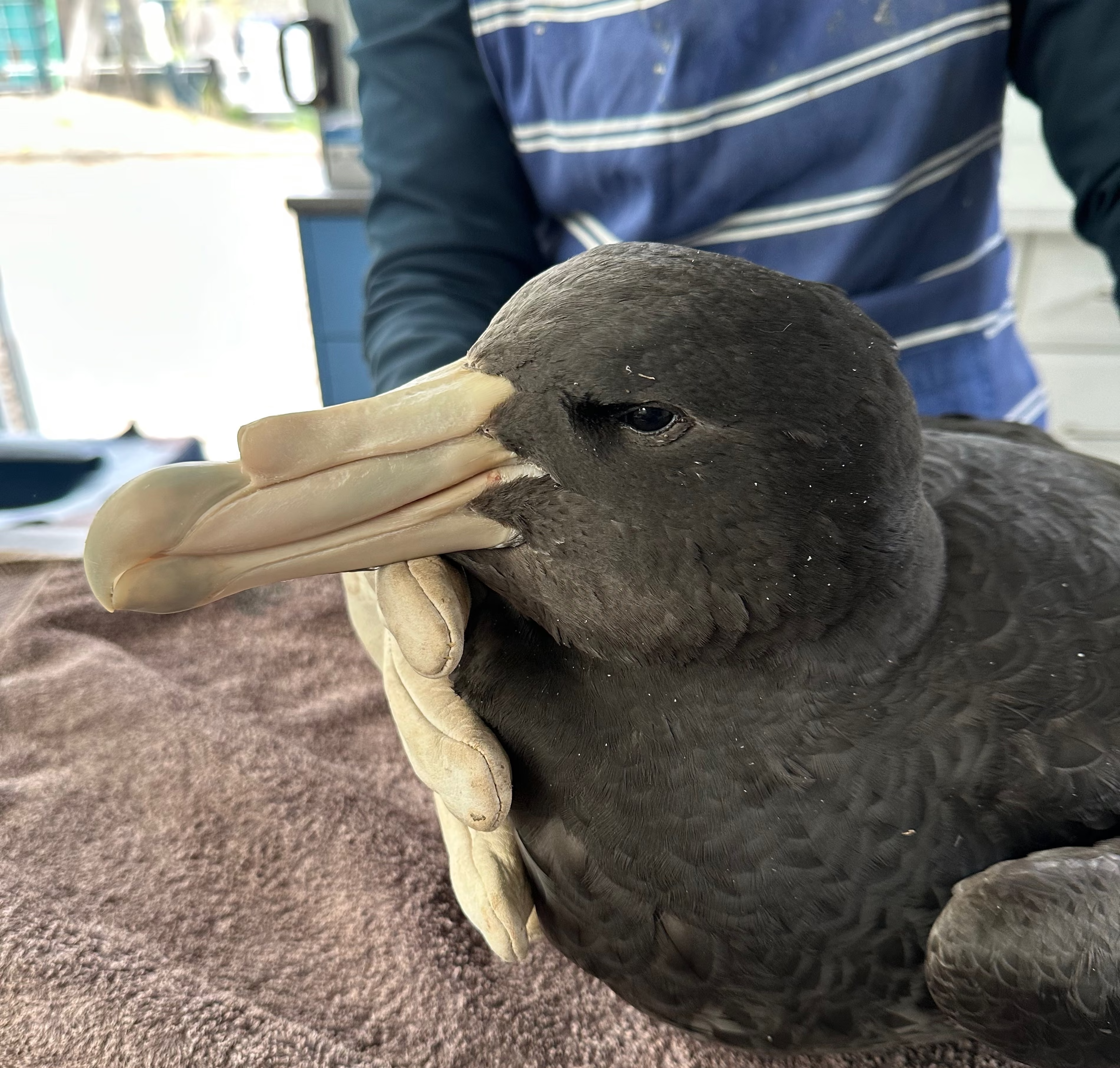 One of the first giant petrels tested positive for Highly Pathogenic Avian Influenza on the Australian mainland, Wylie Bay beach, Western Australia, 18 June 2026. Photograph by Lori-Ann Shibish/Esperance Wildlife Hospital and Sanctuary
ACAP Latest News has been regularly reporting on the seemingly inexorable spread of Highly Pathogenic Avian Influenza (H5 bird flu) around the southern hemisphere. The disease has now been reported from all the sub-Antarctic islands ringing the Southern Ocean save those immediately south of New Zealand. It has been recorded from Australia’s Heard and Macquarie Islands and from the Australian and New Zealand mainlands.
A webinar hosted by Birds Australia on 20 November that gave an update on the Australian situation is now available as a YouTube recording. It notes positive records from the Australian mainland of both species of giant petrels Macronectes spp. and Shy Albatross Thalassarche cauta, as well as from several species of shearwaters and many Greater Crested Terns Thalasseus bergii.
H5 bird flu in Australia: What have we learned, and what needs to happen next?
“It’s been five months since H5 bird flu arrived on mainland Australia. While media attention has eased, the virus continues to threaten and kill Australian wildlife. In this webinar, experts from Australia and Europe explore the global impacts of H5 bird flu, the latest developments in Australia's outbreak and the ongoing risks to our unique birds, mammals and ecosystems. Our speakers share insights into what Australia can learn from Europe's experience, the urgent actions needed to strengthen our national response, and how we can build resilience by reducing threats to wildlife and protecting the species and places most at risk. The webinar also includes a 30-minute Q&A.”
The speakers:
Chris Purnell, Manager, Wetland and Migratory Shorebirds, Birdlife Australia
H5 update November 2026.
Wouter Courtens, Seabird ecologist and researcher, Research Institute for Nature and Forest, Brussels, Belgium
Messages from the other side – H5 in Europe and what Australia can take from it
Jack Gough, CEO, Invasive Species Council
Building resilience. Expanding threat mitigation actions for priority sites and species – the current state of play
John Cooper, Emeritus Information Officer, Agreement on the Conservation of Albatrosses and Petrels, 26 November 2026