 English
  Français
  Español
 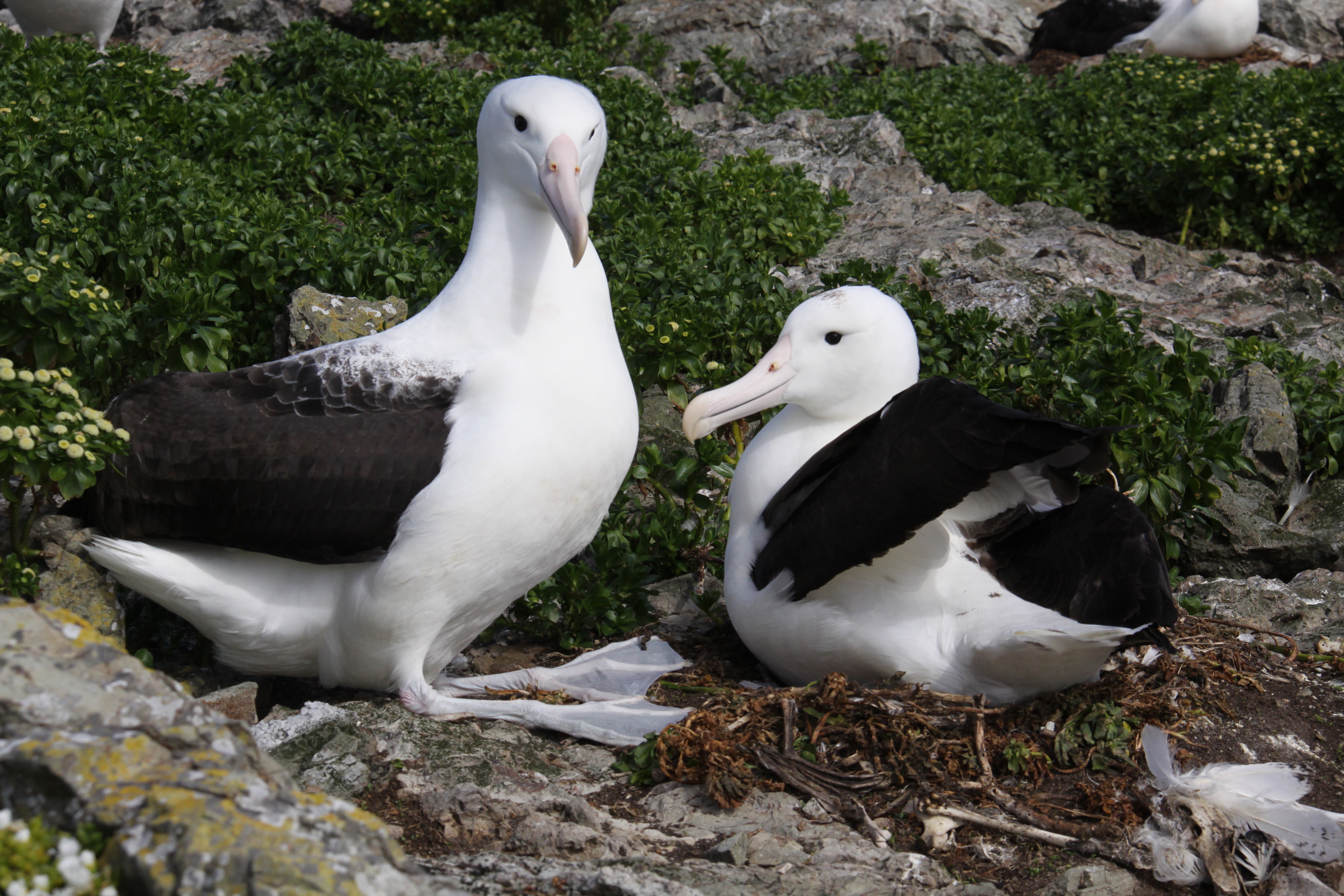 A Northern Royal Albatross pair, photograph by Chris Robertson
The results for BOTY2026 – New Zealand, operated by Forest & Bird, are in. The winner, with 25 601 votes, is the Black Robin Petroica traversi. This Vulnerable species, with an adult population of only 350, breeds on two small islands in the Chathams group. Three seabirds appear in the top ten, chosen from a list of 74 “contestants”. The Eastern Rockhopper Penguin Eudyptes chysocome filholi came in seventh, while the Yellow-eyed Penguin Megadyptes antipodes filled the tenth position. The only ACAP-listed species, and the only procellariiform, in the top tier is the Northern Royal Albatross Diomedea sanfordi, slotting in as No. 9 (having been as high as 8th).
Backed by the Royal Albatross Centre (as well as by ACAP), the Endangered albatross received 12 658 votes. Two other ACAP-listed species, the Vulnerable Black Petrel Procellaria parkinsoni and the Endangered Westland Petrel P. westlandica, did not fare so well, coming in at 48th and 67th, respectively. Hutton’s Shearwater Puffinus huttoni, a species that has been regularly reported on in ACAP Latest News, was 25th.
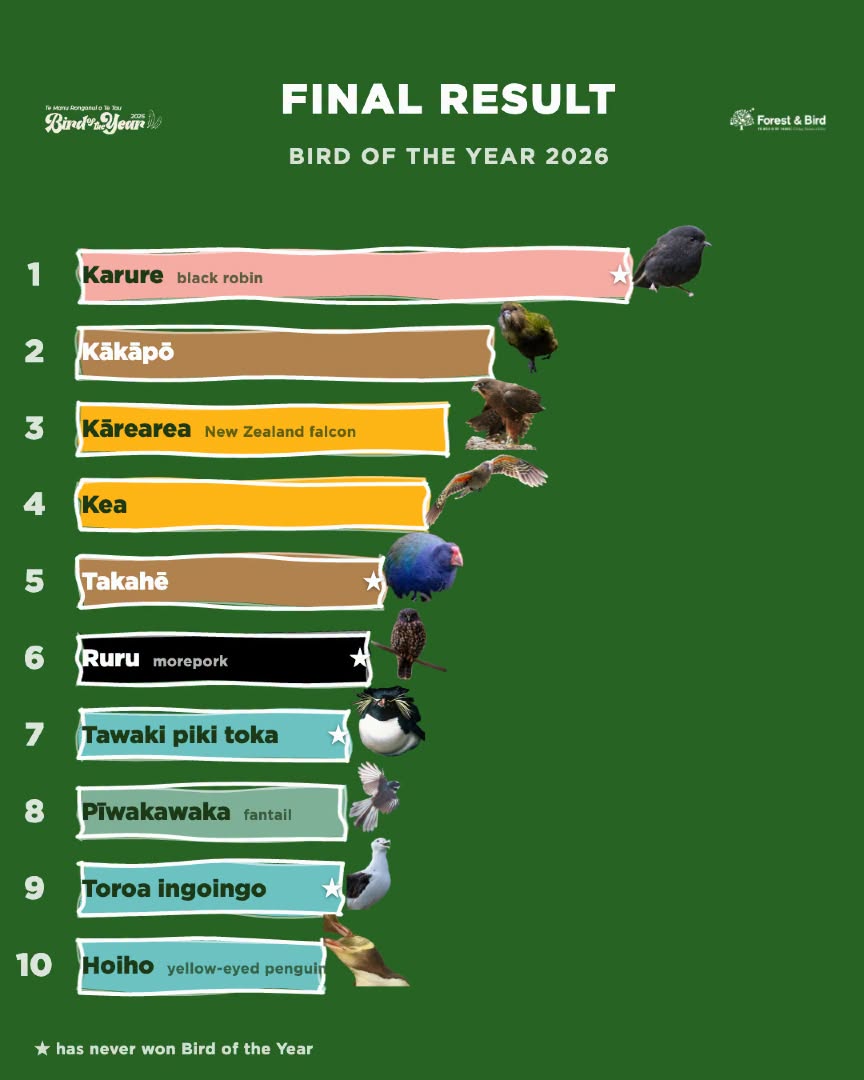 The final results for New Zealand's BOTY2026
“Participation has really soared, says Rebecca Hatch, Forest & Bird's Group Manager. This year has seen record numbers of votes with 105 000 people. Roughly one in every 50 Kiwis [New Zealanders} voted in Bird of the Year 2026. Bird of the Year … helps people discover, connect with, and fall in love with the incredible diversity of New Zealand's wildlife, while shining a light on the real challenges nature is facing.”
In several previous New Zealand BOTYs, it has been the Endangered Antipodean Albatross D. antipodensis that has been the best achieving ACAP-listed candidate. In 2020 it reached its best position, on the podium as second and behind the Kākāpō Strigops habroptila in the top slot.
No albatross (or any procellariform seabird for that matter) has won the competition since its inception in 2005. There is always next year … .
John Cooper, Emeritus Information Officer, Agreement on the Conservation of Albatrosses and Petrels, 24 September 2026