
 English
  Français
  Español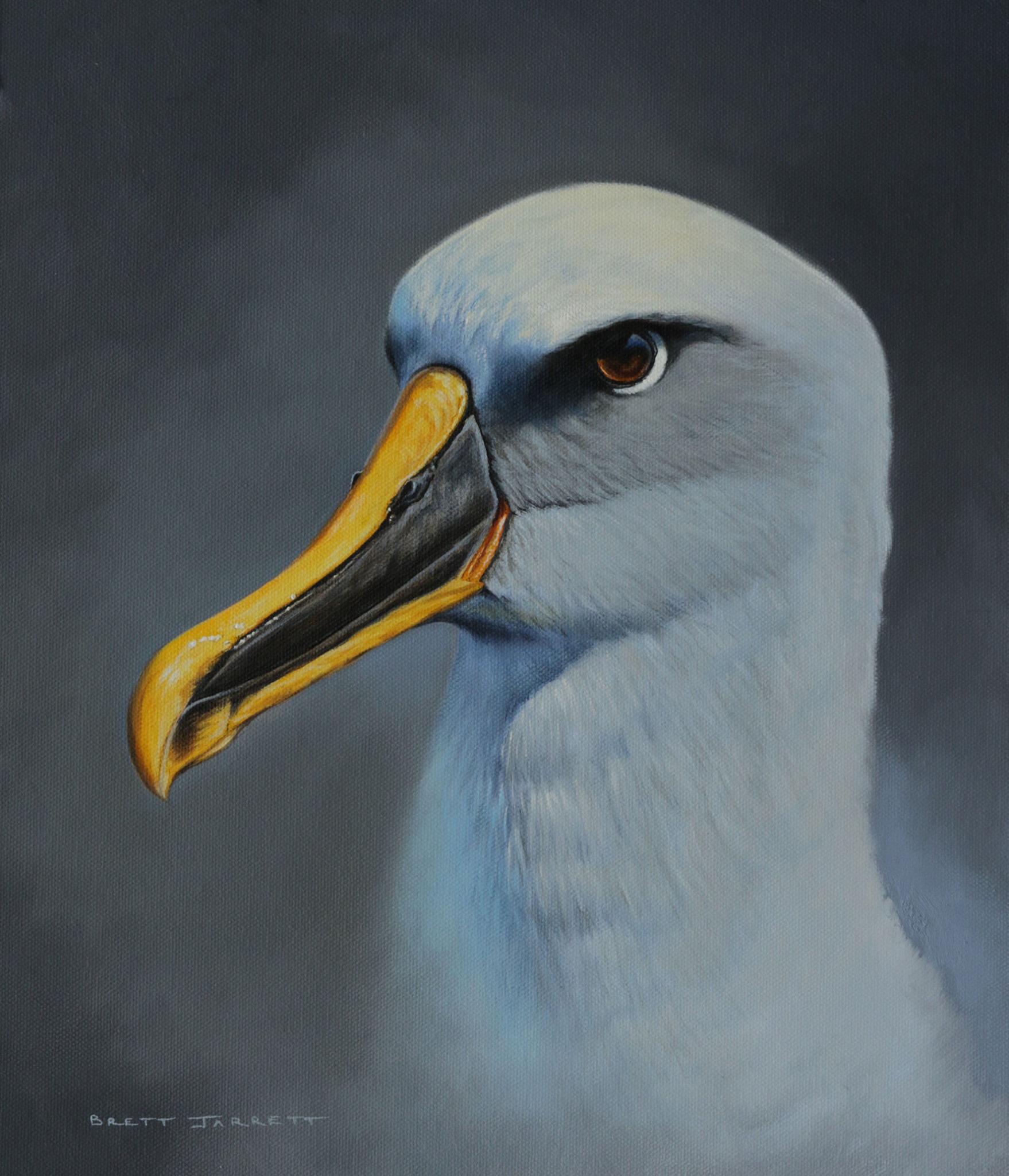
Buller's Albatross, oil on canvas, by Brett Jarrett
Imogen Foote (School of Biological Sciences, Victoria University of Wellington, New Zealand) and colleagues have published in the New Zealand Journal of Zoology on identifying seabird bycatch with genetic markers.
The paper’s abstract follows:
“Fisheries bycatch mortality is a significant threat facing seabirds worldwide. Yet, understanding which species are most impacted is hindered by uncertainties when identifying bycatch specimens. Birds can be damaged by fishing gear and closely related seabird taxa can have overlapping traits, presenting challenges for identification based on morphology and plumage. Here, we have developed a genetic method for identifying seabirds at risk from bycatch in Aotearoa New Zealand across 36 species including albatrosses, storm petrels, petrels, shags, and penguins. Cytochrome Oxidase I (COI) analysis enabled identification of all taxa to the genus level, and 75% to the species level. All but one species (Salvin's albatross, Thalassarche salvini) that could not be successfully identified using COI could be distinguished from their more highly variable mitochondrial control region sequences. Subspecies of Cape petrel (Daption capense capense/D. c. australe), Antipodean albatross (Diomedea antipodensis antipodensis/D. a. gibsoni), and Buller's albatross (T. bulleri bulleri/T. b. platei) could not be distinguished using either of these loci so will require development of more highly discriminating markers. Our methodology will be a valuable complement to the current formal identification process of seabird bycatch in South Pacific fisheries, helping to inform future fisheries management and seabird conservation.”
Reference:
Foote, I., Chambers, G.K., Rawlence, N.J. & Ritchie, P.A. 2026. Using genetic markers to identify seabirds caught in Aotearoa New Zealand fisheries. New Zealand Journal of Zoology 53 e70020. doi.org/10.1002/njz2.70020.
John Cooper, Emeritus Information Officer, Agreement on the Conservation of Albatrosses and Petrels, 21 May 2026