 English
  Français
  Español
 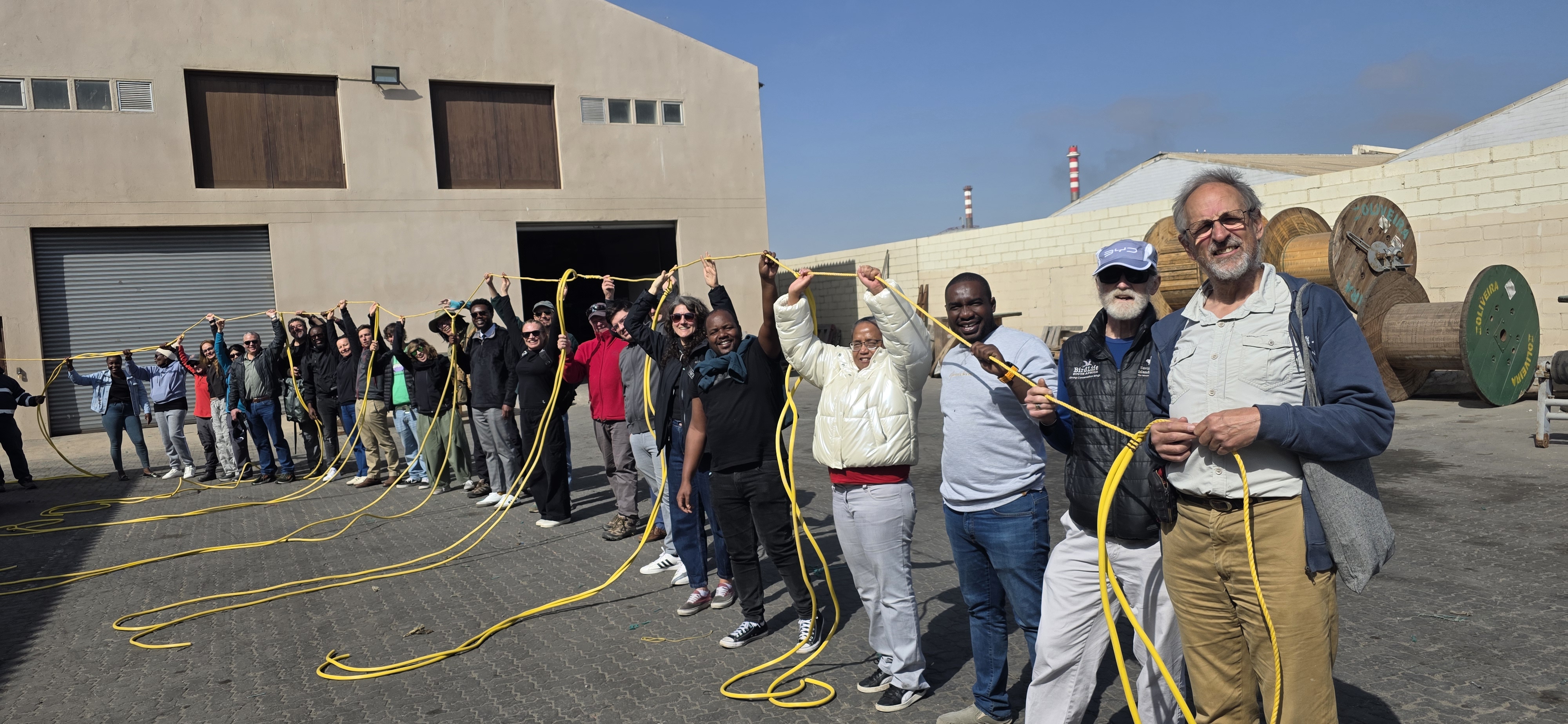 Delegates and observers to the 15th Meeting of the ACAP Advisory Committee hold up a trawl bird scaring line at Walvis Trawl, Walvis Bay, Namibia, photograph by Makhudu Masotla
On Thursday 04 June delegates and observers attending the 15th Meeting of the ACAP Advisory Committee (AC15) in Swakopmund, Namibia travelled to the nearby fishing town of Walvis Bay to make site visits to two businesses involved with the fishing industry.
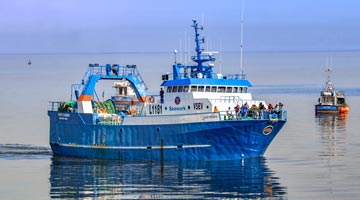 Seawork's trawler, Victory
We first met up with Pierre le Roux, Sales and Marketing Manager for Seawork Fish Processors (Pty) Ltd in the fishing harbour who took us aboard one of his demersal hake trawlers, the Victory, which was getting ready for sea. We visited the ship’s bridge in batches where Pierre explained how twin bird-scaring lines were deployed either side of the trawl and showed us how interactions with the nest or warps by birds (and seals and turtles) were logged.
Seawork Fish Processors specializes in the catching, value-adding and marketing of frozen seafood products for the international market. The main product line is Hake Merluccius capensis/paradoxus, with Kingklip or Ling Genypterus capensis and Monkfish Lophius vomerinus as bycatch.
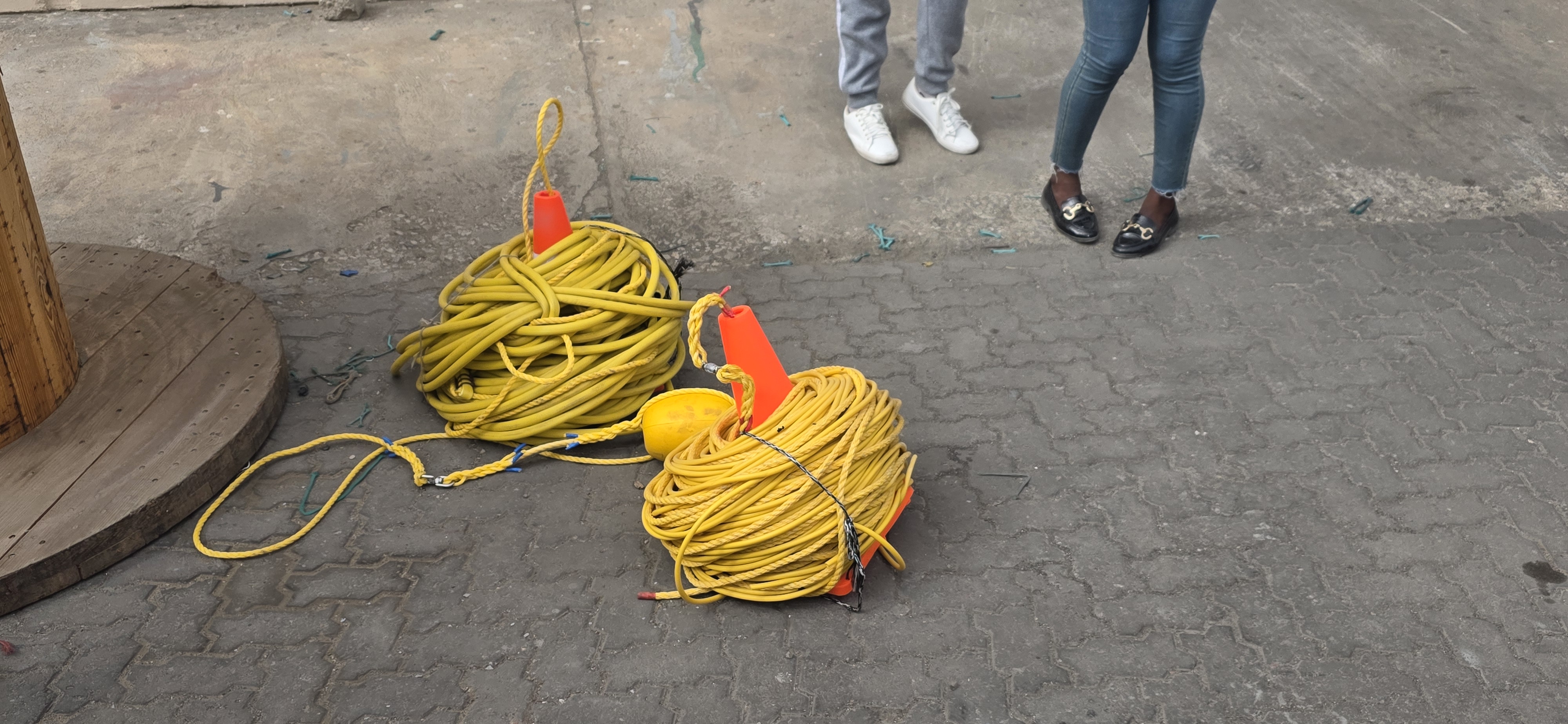 Trawl (back) and longline bird-scaring lines. The orange traffic cones act as drags in the water, keeping the lines taught when deployed, photograph by Makhudu Masotla
Back on the bus for a short ride to Walvis Trawl Import and Export, where Titus Shaanika who was previously Leader, Albatross Task Force, Namibia Nature Foundation, showed us examples of bird-scaring lines for longliners and for trawlers. We had fun unrolling one as the photos show! The bird-scaring lines are made by the all-woman Meme Itumbapo Craft cooperative, which collaborates with the Albatross Task Force and Namibia Nature Foundation.
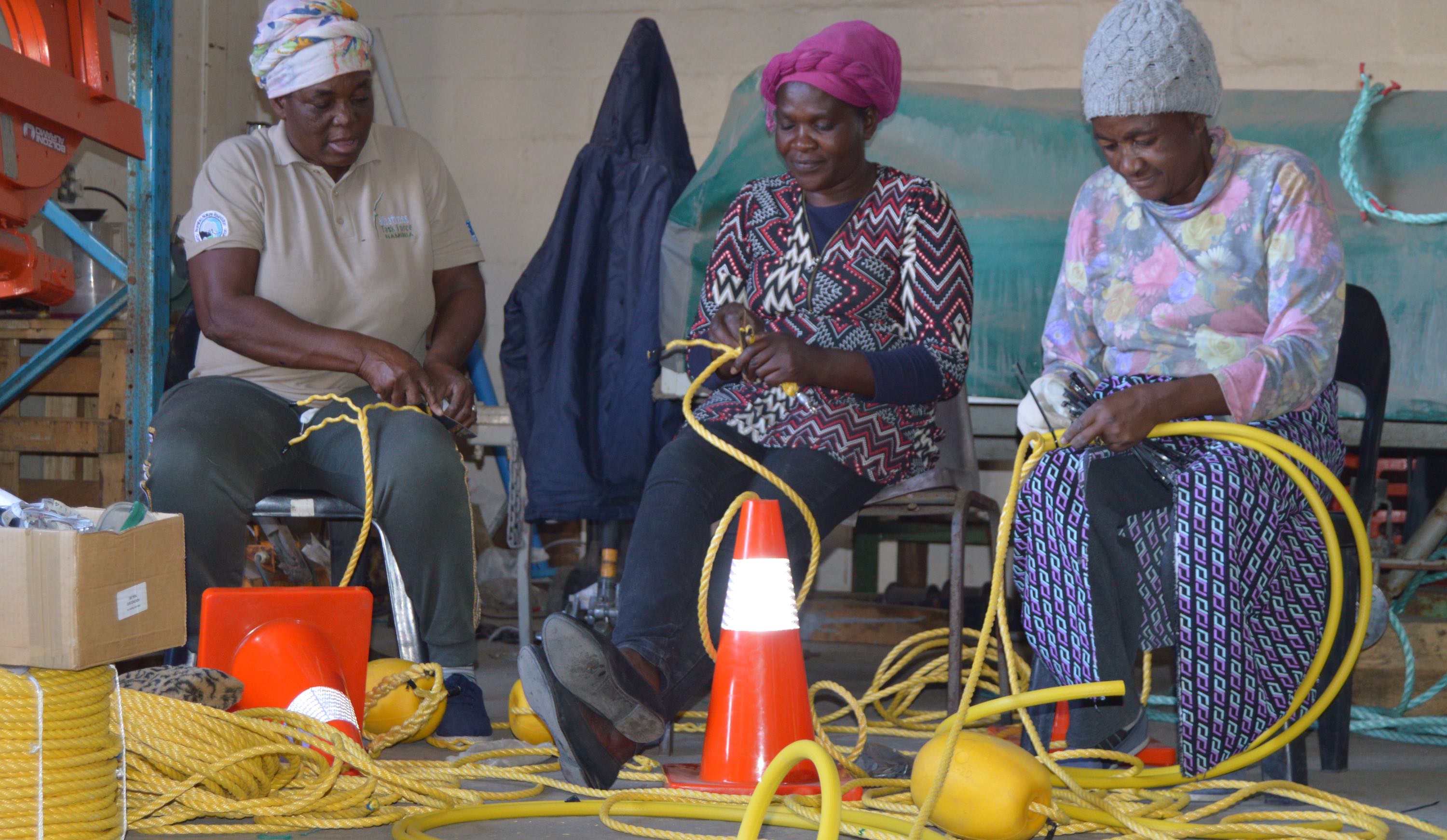 The women of Meme Itumbapo making bird-scaring lines, photograph from the Benguela Current Convention
Excursions at ACAP meetings usually take attendees out to sea to spot seabirds, or if an inland meeting, to a game reserve or the like to view wildlife and natural habitats. This trip was different, but equally enjoyable, and perhaps more valuable as we got to see and handle the actual equipment that contiunues tosave so many seabirds, in Nambian waters, and elsewhere around the world.
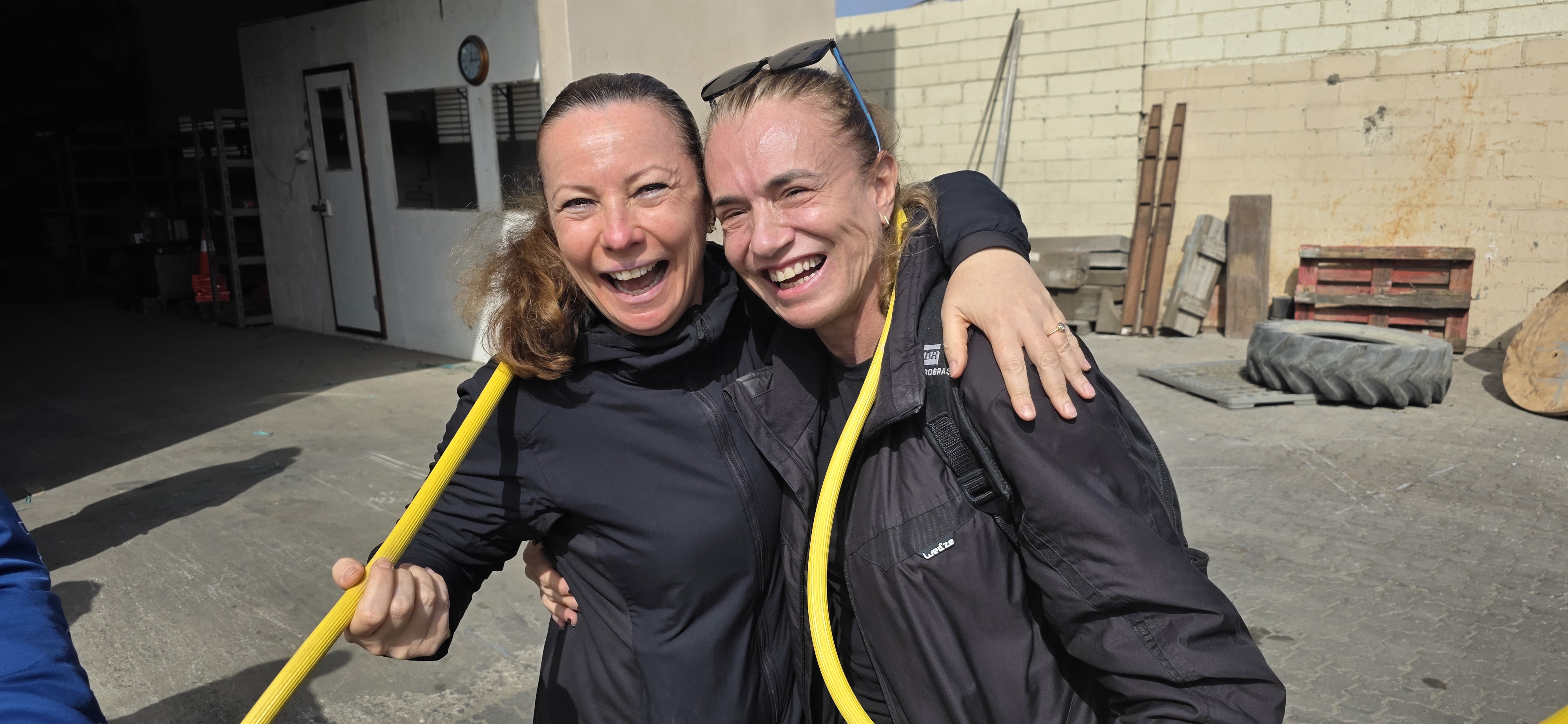 Mandi Livesey (Australia) and Tatiana Neves (Brazil) ham it up with a dropper from a trawl bird-scaring line, photograph by Makhudu Masotla
With thanks to Pierre le Roux, Seawork Fish Processors and Titus Shaanika, Managing Director, West Pelican Investments.
References:
Da Rocha, N. et al. 2021. Reduction in seabird mortality in Namibian fisheries following the introduction of bycatch regulation. Biological Conservation 253, 108915.
Munro, A. 2021. Namibian fishery reduces seabird deaths by 98%. BirdLife International 07 January 2021.
Paterson, J.R.B. et al. 2017. Seabird mortality in the Namibian demersal longline fishery and recommendations for best practice mitigation measures. Oryx 53: 300-309.
Thomson, G.C., Shaanika, T., Matjila, S. & Paterson, J. 2021. Gliding into a brighter future. Albatrosses and Namibian fisheries. Conservation Namibia, 09 September 2021.
John Cooper, Emeritus Information Officer, Agreement on the Conservation of Albatrosses and Petrels, 05 June 2026