
 English
  Français
  Español
 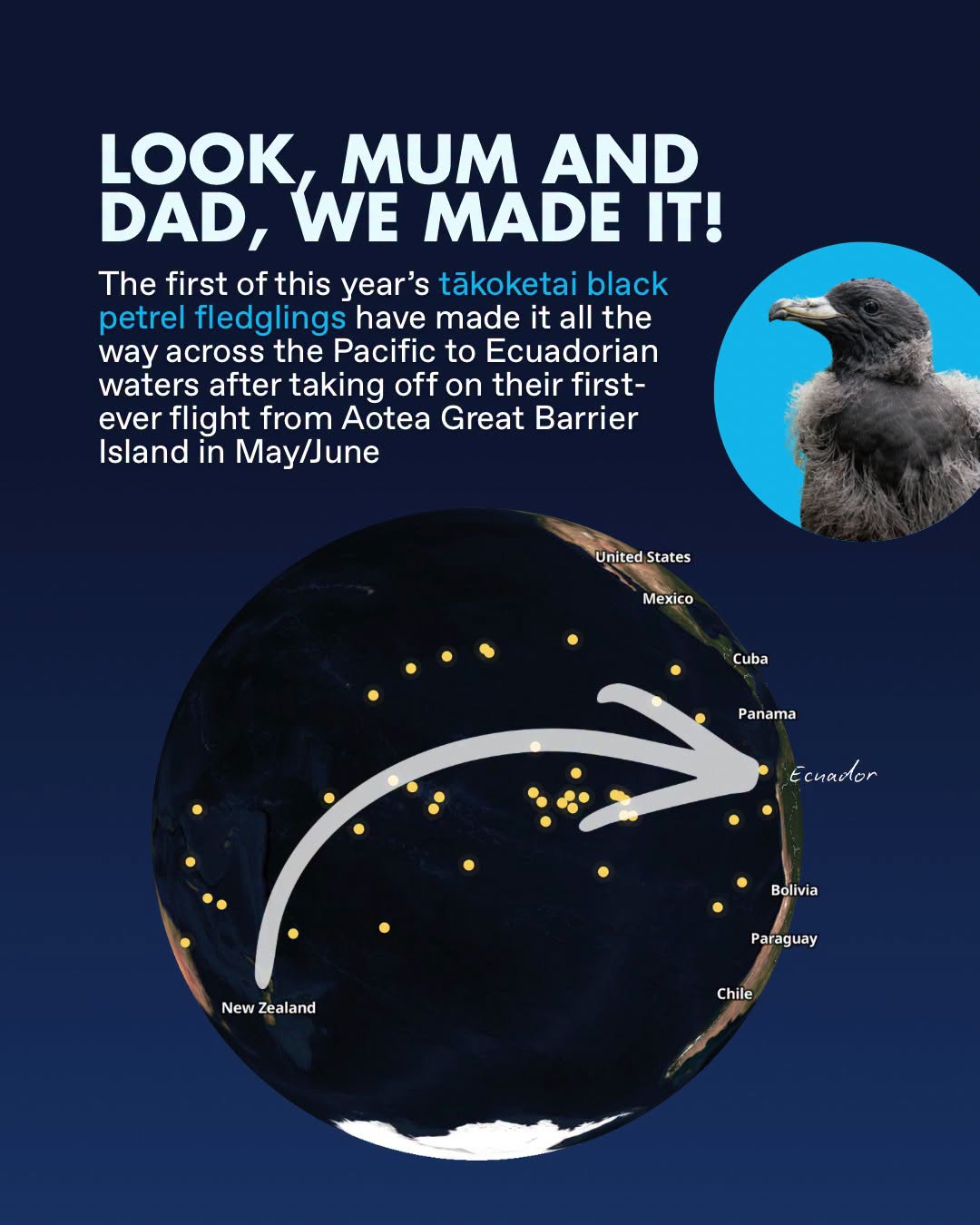 Situation with the Black Petrel tracking study as of 16 July 2026
In May this year Vulnerable Black Petrels or tākoketai Procellaria parkinsoni begun fledging, leaving their burrows on New Zealand’s Great Barrier Island/Aotea and Little Barrier Island/Te Hauturu-o-Toi and heading to Pacific waters off the coast of Ecuador (click here). In the largest Black Petrel tracking study undertaken to date, 47 fledglings were fitted with live trackers “to help researchers better understand one of the ocean’s enduring mysteries: why do fewer than 10% of Black Petrel chicks ever return home?”
At least two of the tracked young Black Petrels, “’Ono” (six in Te Reo Māori) and “Whitu” (seven in Te Reo Māori) have now made it all the way across the Pacific to Ecuadorian waters, respectively, 16 004 km in 67 days and 20 202 km in 71 days since fledging.
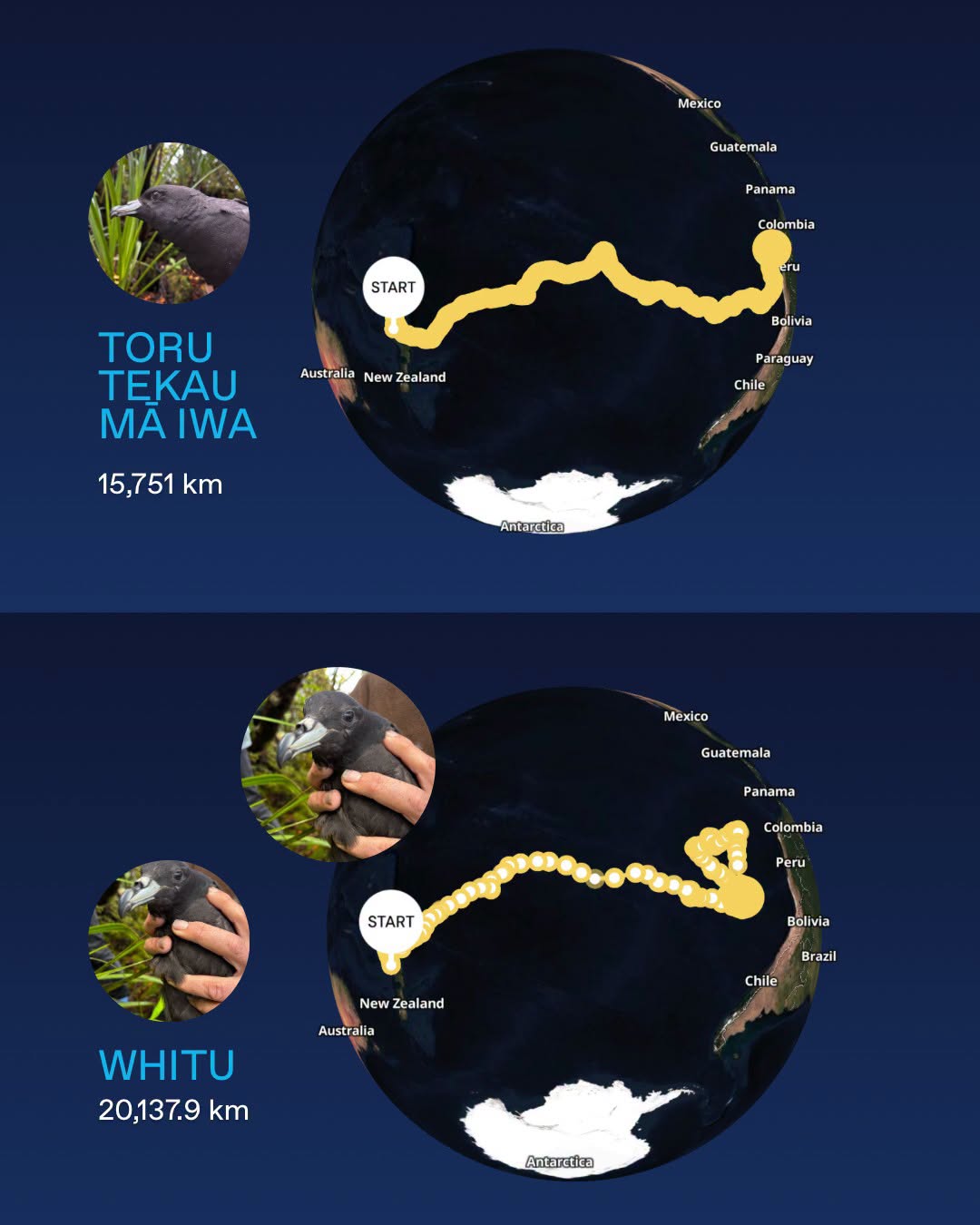 Tracks of two of the Black Petrel fledglings
ACAP Latest News will continue to report on the tracking study as further information becomes available.
Follow the tracker maps here. Information from the Facebook page of Live Ocean.
John Cooper, Emeritus Information Officer, Agreement on the Conservation of Albatrosses and Petrels, 16 July 2026