
 English
  Français
  Español
 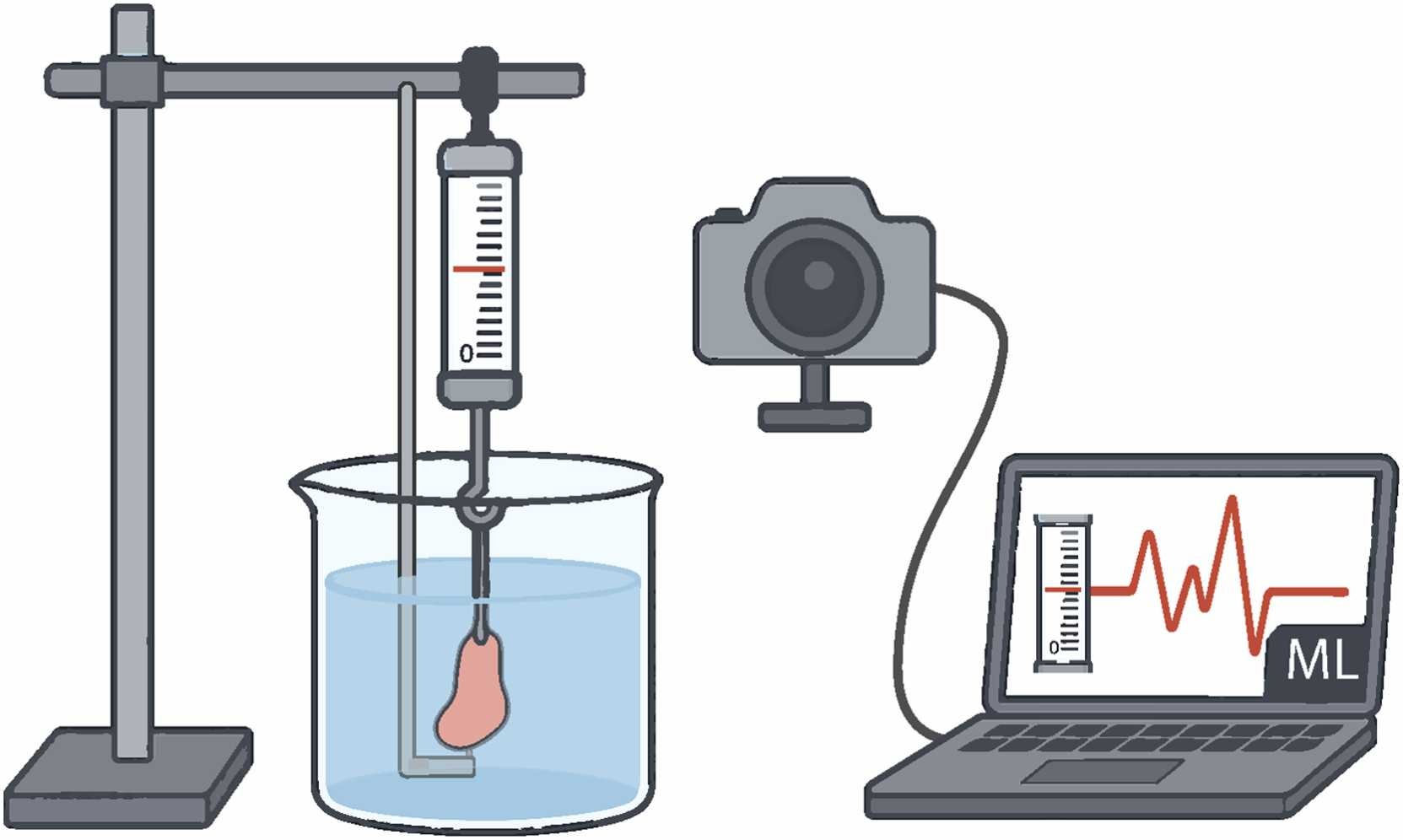 Experimental set-up to measure relaxation and contraction of proventriculus sections from Flesh-footed Shearwater fledglings, from the publication
Ingrid Pollet (Department of Biology, Acadia University, Wolfville, Nova Scotia, Canada) and colleagues have published open access in the Journal of Hazardous Materials: Plastics on the effects of ingested plastic on stomachs of Near Threatened Flesh-footed Shearwaters Ardenna carneipes.
The paper’s abstract follows:
“Plastic pollution poses a severe threat to marine wildlife, with ingestion documented in hundreds of species worldwide. While physical and chemical consequences of plastic ingestion are well established, its biomechanical impacts remain poorly understood. Here, we examined how plastic ingestion influences the mechanical properties of the proventriculus (stomach) of Sable Shearwater (Ardenna carneipes) fledglings from Lord Howe Island, Australia, a population known for high plastic exposure. We performed tensile tests on ex vivo proventriculus tissue samples from 23 individuals with a gradient of ingested plastic (0–55.39 g), and quantified relaxation and contraction following acetylcholine stimulation. We hypothesised that plastic-impacted tissues would exhibit reduced contraction. Instead, proventriculus from birds with low or no plastic relaxed more readily, whereas those with high plastic loads contracted more strongly in response to acetylcholine. Furthermore, proventriculus weight was positively correlated with plastic load (r = 0.94, p < 0.0001). These experiments represent a first-of-its-kind approach: ex vivo biomechanical testing of avian tissues in field laboratories from wild populations. Our findings reveal anatomical and mechanical consequences of plastic ingestion, with increased proventriculus mass and force generation consistent with pathological tissue remodelling and a failure to undergo the normal reduction in gastrointestinal mass prior to migration. Chronic plastic exposure may disrupt stomach functions, with downstream effects on digestion, nutrient absorption, and overall fitness.”
Reference:
Pollet, I.L., Connelly, W.M., Feenstra, M.L., de Jersey, A.M., Bond, A.L., Lavers, J.L. & Rivers-Auty, J. 2026. Plastic ingestion alters stomach anatomy and biomechanics in sable shearwaters (Ardenna carneipes). Journal of Hazardous Materials: Plastics 5, 100080.
John Cooper, Emeritus Information Officer, Agreement on the Conservation of Albatrosses and Petrels, 15 September 2026