 English
  Français
  Español
 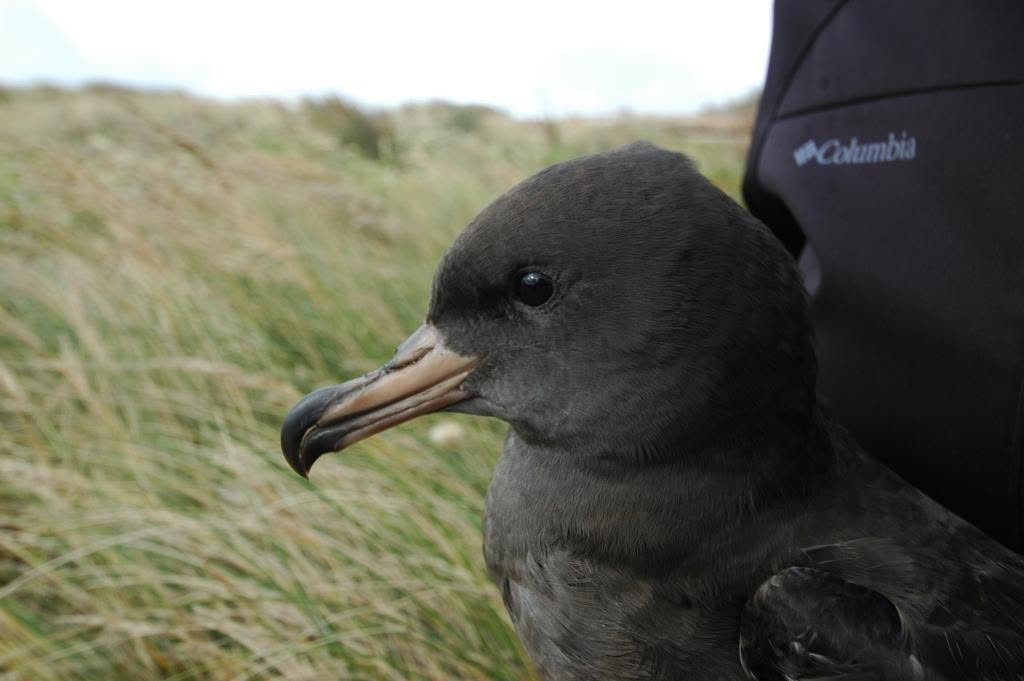 A Flesh-footed Shearwater in the hand, photograph by Jennifer Lavers
Alix de Jersey (Tasmanian School of Medicine, Hobart, Australia) and colleagues have prepublished open access in the international journal of avian science Ibis on aspects of the physiology of the Near Threatened (and proposed ACAP listed) Flesh-footed Shearwater Ardenna carnepeis.
The paper’s abstract follows:
“Life-stage transitions in seabirds involve substantial shifts in physiological demands, yet the molecular mechanisms underpinning these changes remain poorly resolved. Here we applied untargeted data-independent acquisition mass spectrometry (DIA-MS) to characterize and compare the plasma proteomes of fledgling and adult Sable Shearwaters Ardenna carneipes. Fledglings were sampled during the predeparture period, while adults were sampled in the weeks following return from migration at the onset of the breeding season. Proteomic analysis identified 726 plasma proteins, of which 306 (42%) differed significantly between the life stages. Fledglings exhibited enrichment of proteomic pathways associated with extracellular matrix (ECM) organization and glycolytic metabolism consistent with rapid growth, tissue development and metabolic preparation for departure. In contrast, adults showed enrichment of complement and coagulation pathways, and ECM remodelling, reflecting a physiological state associated with tissue and metabolic maintenance. Together, these findings demonstrate that plasma proteomics can resolve coordinated, system-level physiological differences across life stages in wild seabirds. This work provides a molecular framework for understanding developmental and adult physiology and highlights the potential of proteomics to detect subtle physiological shifts relevant to ecology and conservation.”
Reference:
de Jersey, A.M., Bond, A.L., Wilson, R., Zosky, G.R., Rivers-Auty, J. & Lavers, J.L. 2026. Life-stage variation in Sable Shearwater (Ardenna carneipes) physiology assessed using proteomics. Ibis doi.org/10.1111/ibi.70080.
John Cooper, Emeritus Information Officer, Agreement on the Conservation of Albatrosses and Petrels, 13 July 2026