
 English
  Français
  Español
 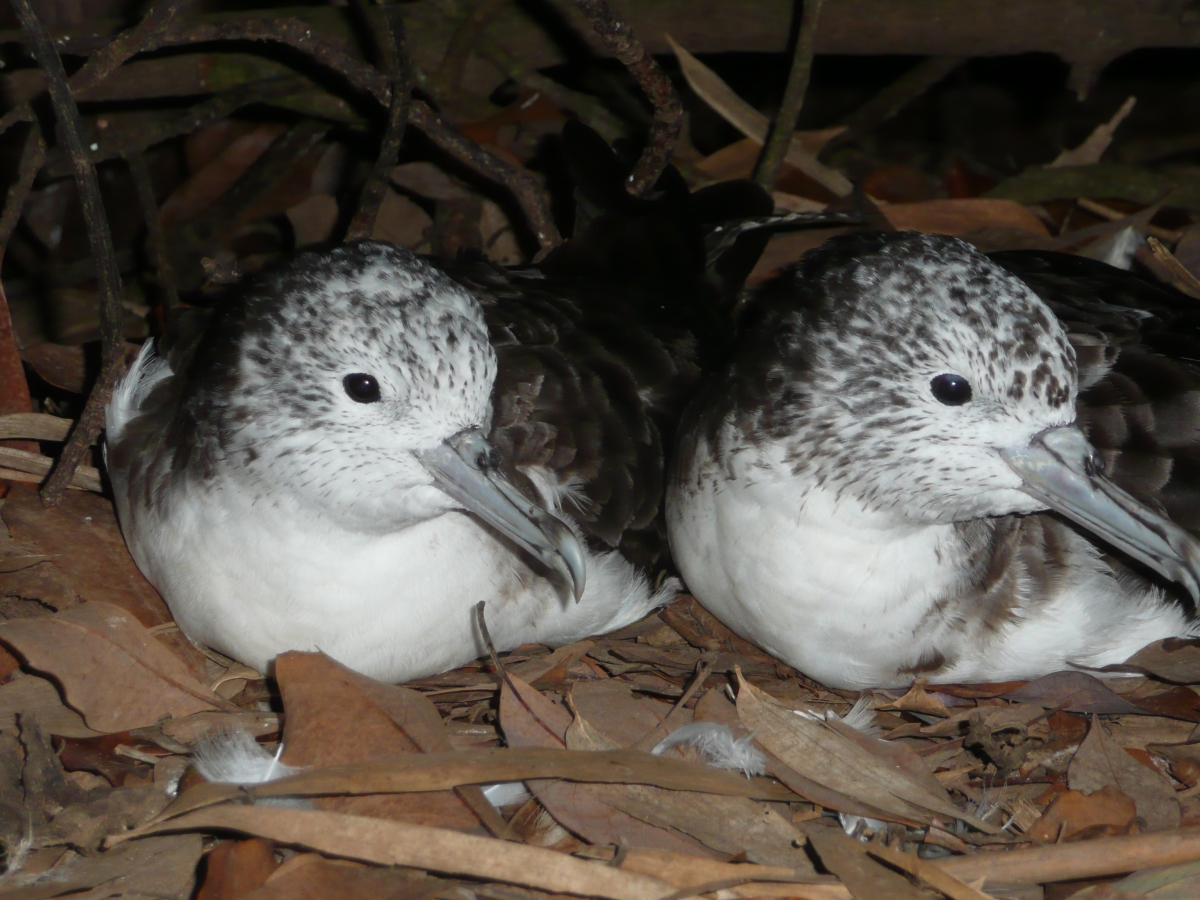 A Streaked Shearwater pair
Daisuke Ochi (Fisheries Resources Institute, Japan Fisheries Research and Education Agency, Kanagawa, Japan) and colleagues have published in the Journal of Ornithology on nest attendance during chick rearing of the Near Threatened Streaked Shearwater Calonectris leucomelas.
The paper’s abstract follows:
“This study tested a hypothesis regarding behavioral coordination in breeding behavior of Streaked Shearwater Calonectris leucomelas: the “chick development hypothesis,” which posits that coordination enhances chick growth via improved provisioning. As an additional supportive hypothesis, we examined whether highly coordinated pairs may exhibit longer nest stay durations, which contributes to the maintenance of coordination. Using an automated recording system, we quantified coordination with the φ−coefficient and assessed its relationship with reproductive performance through provisioning and nest attendance metrics. We found that higher parental coordination was associated with fewer extended nest absences, potentially reducing periods of prolonged chick fasting; however, while provisioning rate significantly enhanced chick growth, coordination itself did not directly affect chick growth rate. Notably, coordinated pairs exhibited significantly longer nest stay durations, supporting the supportive hypothesis. These results clarify that behavioral coordination is associated with both longer parental nest stays and fewer extended absences, demonstrating that its supplementary effects extend beyond direct relationships to chick growth.”
Reference:
Ochi, D., Oka, N. & Watanuki, Y. 2026. Coordinated discordance: strategic nest attendance for chick rearing in a monogamous seabird. Journal of Ornithology doi.org/10.1007/s10336-025-02352-7.
John Cooper, Emeritus Information Officer, Agreement on the Conservation of Albatrosses and Petrels, 12 February 2026