 English
  Français
  Español
  BirdLife Australia’s three-part 2026 Seabird Webinar Series will showcase current seabird research and conservation action, with sessions aligned to major global awareness days, starting with World Albatross Day on 19 June. The series will feature a range of speakers working on habitat restoration, cross-border conservation and the application of scientific data to seabird protection. “From restoring breeding habitats on remote islands to tracking seabirds to understand their marine habitats, this series brings together leading conservation practitioners and researchers working to secure a future for seabirds”.
Fittingly, on World Albatross Day, the first session will address the WAD2026 theme of Habitat Restoration. “It will share real-world examples of how healthier nesting habitats can improve breeding success for albatrosses and other seabirds, and why long-term restoration is essential for seabird conservation”.
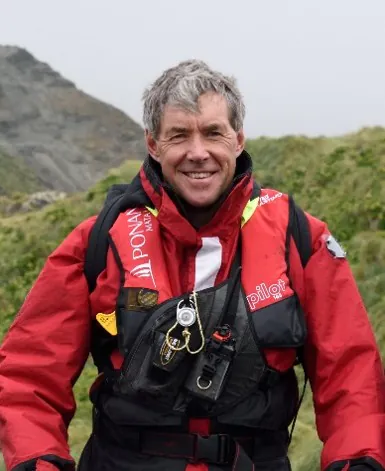 Keith Springer, Operations Manager, Mouse-Free Marion Project
The World Albatross Day session’s two speakers and their titles are:
Keith Springer, Operations Manager, Mouse-Free Marion Project: “Managing vertebrate pests on seabird breeding colonies in the Southern Ocean”, and
Yuna Kim, Seabird Project Coordinator, BirdLife Australia: “Gabo Island seabird habitat restoration plan”.
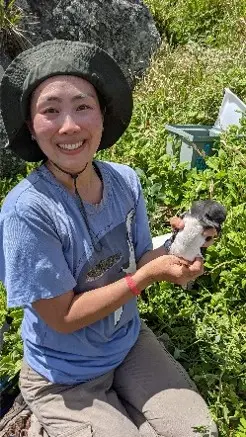
Yuna Kim, Seabird Project Coordinator, BirdLife Australia, holds a White-winged Petrel
Register here; the webinar session is set to last an hour, commencing at 18h00 AEST.
The two following sessions will be on “Working across Borders: Connecting People and Seabirds” on World Seabird Day (03 July) and “Using Scientific Data to Protect Seabirds” on World Nature Conservation Day (28 July). All three sessions are now open for registration.
With thanks to Yuna Kim.
John Cooper, Emeritus Information Officer, Agreement on the Conservation of Albatrosses and Petrels, 13 June 2026